
How to Take a Cargo Ship from Yurimaguas to Iquitos (2025 Guide)

TL;DR
Your most up-to-date, fully honest guide to Amazon cargo ship travel.
Taking a cargo ship from Yurimaguas to Iquitos is one of the most unique journeys you can make in Peru – and one of the most misunderstood. There’s no schedule, no website, and almost no reliable information online. But the reward? Drifting along the Amazon for days, sharing space with locals, livestock, hammocks, and the river itself.
I completed this journey in 2025, and this is the most accurate, up-to-date guide you’ll currently find. If you want the real, unfiltered truth (and the practical steps to make it smooth), you’re in the right place.
Let’s start at the beginning.
- How to Take a Cargo Ship from Yurimaguas to Iquitos
- How to Get to Yurimaguas
- Where I Stayed in Yurimaguas
- What to Bring on the Cargo Ship
- How to Secure a Spot on a Cargo Ship from Yurimaguas to Iquitos
- What Is the Cargo Ship Like
- How Many Days Does it Take?
- Arrival in Iquitos – What Happens Next?
- Our Amazon Cargo Ship Experience
- In Conclusion: Who Should / Shouldn’t Do This
How to Take a Cargo Ship from Yurimaguas to Iquitos
How to Get to Yurimaguas
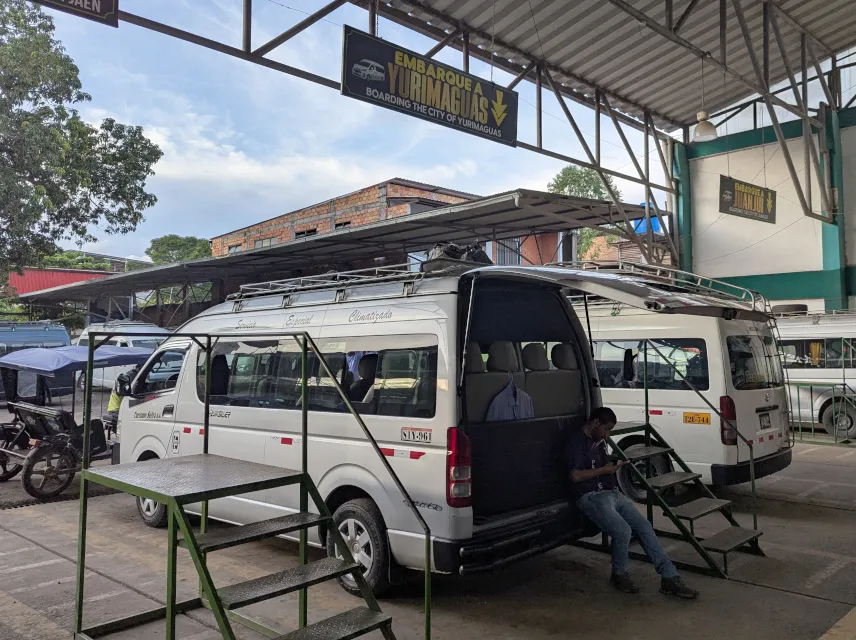
Yurimaguas is about 2 hours north of Tarapoto. Colectivos (shared minivans) run throughout the day and leave when full.
I paid 20 PEN.
Where I Stayed in Yurimaguas
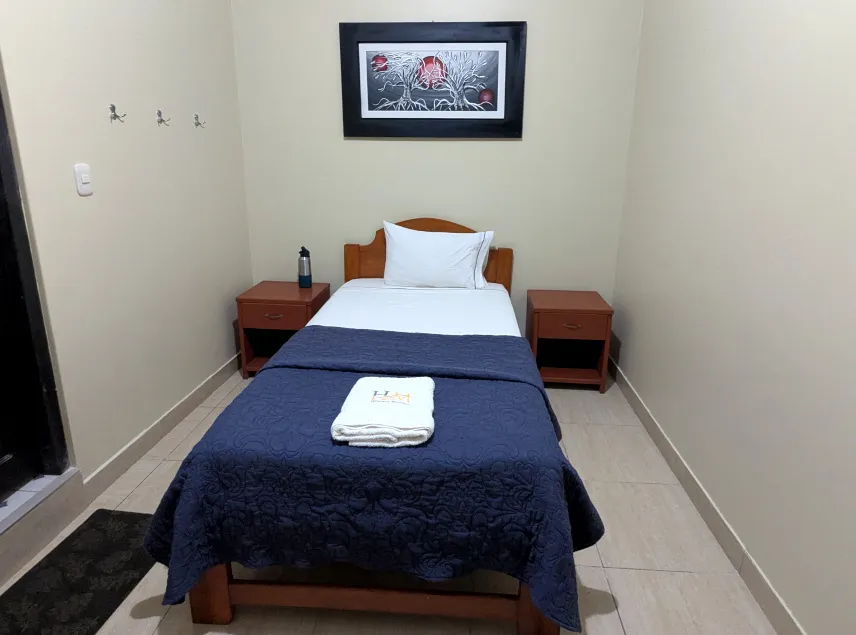
I stayed at Hospedaje Moralillos and can highly recommend it for your cargo ship adventure.
I arrived late in the evening, and they organized a very reliable pickup from the bus station.
As soon as they knew that I wanted to take the cargo ship to Iquitos, they hooked me up with a contact who sold me a hammock and even scouted out the port with me. We found out that the boat doesn’t leave until morning, so we went back to the hotel, where I had a lovely cold shower and a final night in a bed.
In the morning, the same guy who had picked me up the evening before picked me up to buy some water and take me to the boat.
What to Bring on the Cargo Ship
This is a one-way trip, so you will most likely bring all of your belongings. Additionally, you need to bring:
- A hammock (mandatory).
- A bowl or container for meals (mandatory).
- At least 6 litres of drinking water.
- Toilet paper + disinfectant.
- Earplugs + sleep mask.
- Warm clothes – the breeze at night is colder than you expect.
Optional but helpful:
Portable power bank, snacks, flip-flops.
How to Secure a Spot on a Cargo Ship from Yurimaguas to Iquitos
You cannot buy tickets online. There is no schedule. Boats leave when full. No hotel staff, colectivo drivers, or locals know departure times – only the captain does, and even he may change it.
How it worked for me: When I exited the bus in Yurimaguas, a guy directly approached me with great urgency and told me to come with him to secure a spot on the next boat. As it was already dark and I was travelling alone, I preferred to go with the transfer my hotel organized.
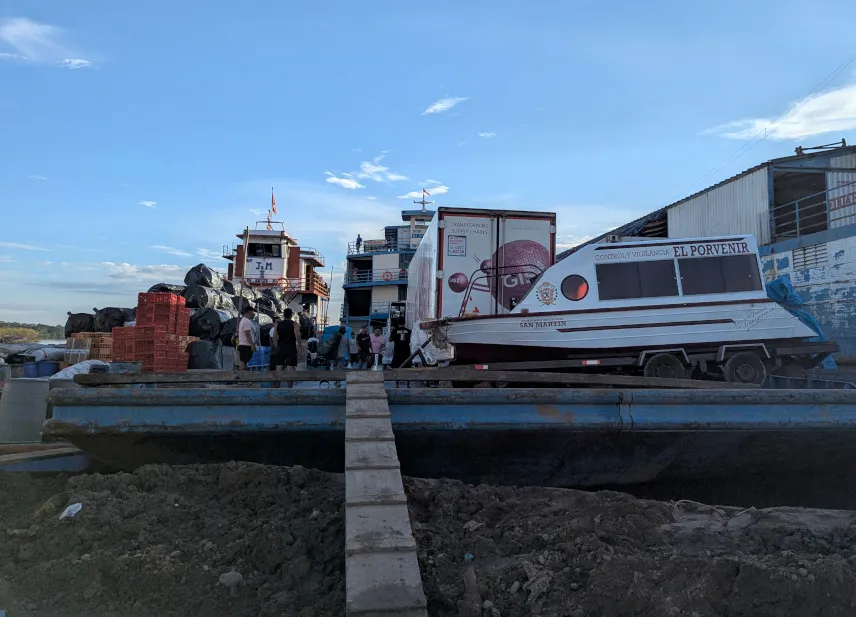
I went to Puerto de la Boca in the evening to check when the next boat leaves. They told me that the boat leaves at 8:00 a.m. the next morning. I went back to the boat at around 7 a.m. just to be safe, but we didn’t leave until 11:25 a.m. After all, it is a cargo ship, and it leaves when it’s full.
I bought my ticket directly from the captain in cash. I also met the guy from the bus station again, who seemed to be legit, whereas his sense of urgency was not.
Another guy quickly picked up my luggage and brought me to the passenger deck, where he also hung my hammock for a small tip.
How to Choose a Cargo Ship
Online, you always read that the Eduardo ships are the best option for travellers. Frankly, I was not presented with any other option. In case you opt for an Eduardo ship, there is only one leaving at a time. Mine was Eduardo 5. If you don’t like the ship, you have to wait for the next…
What Does it Cost?
I paid 120 PEN for a spot to hang my hammock, including all the meals.
What Is the Cargo Ship Like
What to Expect on Board
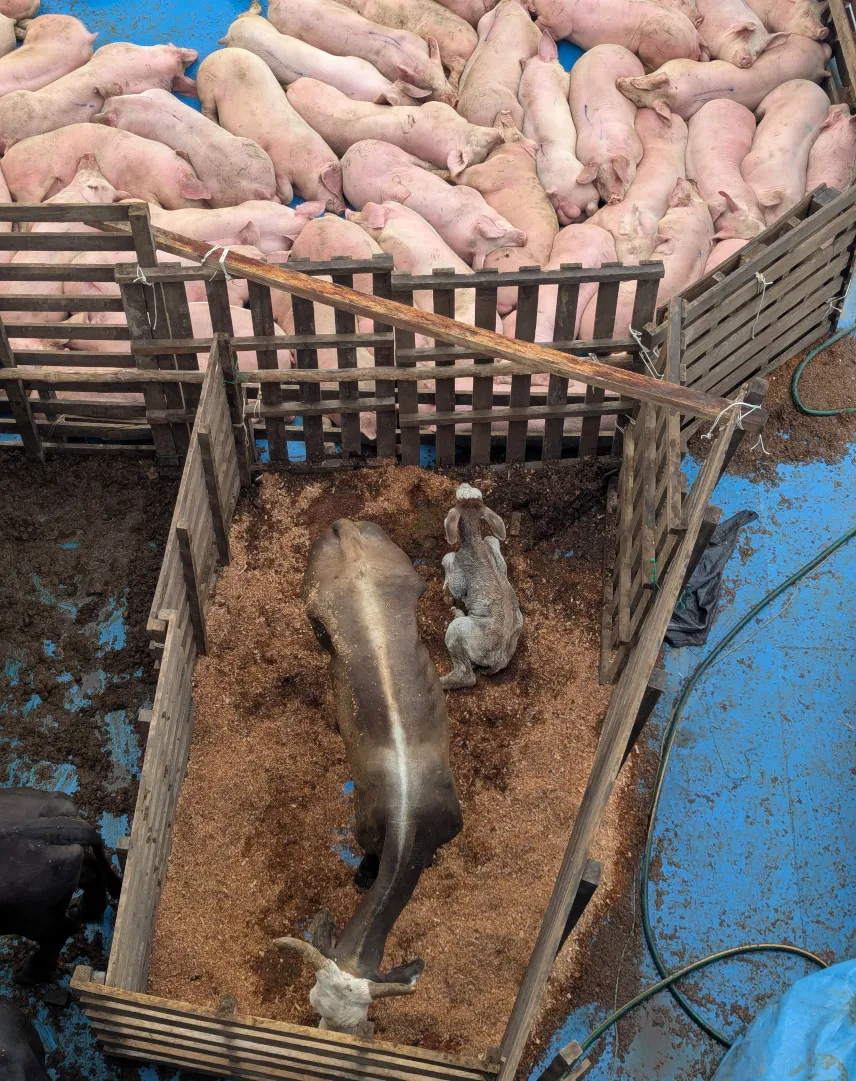
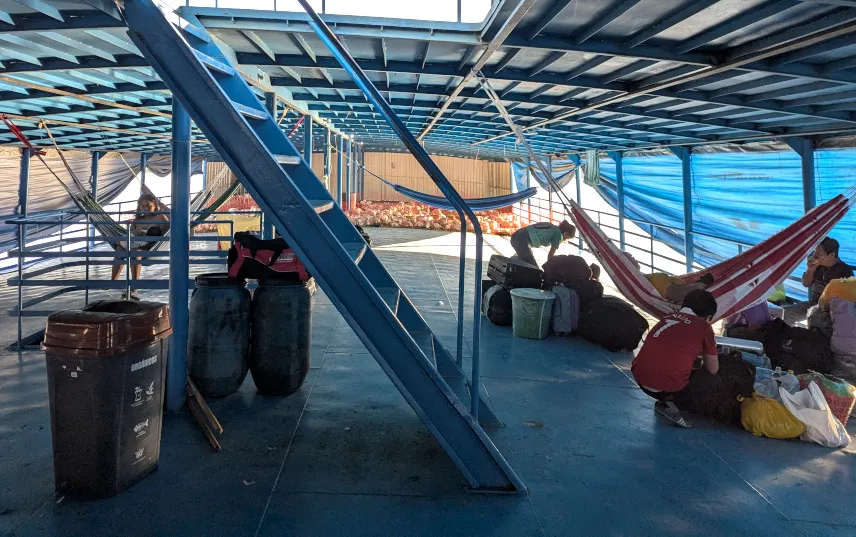
I was prepared for cargo but not really for livestock. We had to share the only sleeping deck with loads of chicken, and on the lower deck, we travelled with pigs and cows. You will most likely hear and smell the animals throughout your journey.
Before I boarded, I was told that there would be plenty of other tourists. Surprise: I was the only one. The only other passengers were locals travelling the the riverside communities or Iquitos with too much luggage for a flight.
Where to Sleep?
My ship, Eduardo 5, is a small ship with only one sleeping deck. There were not a lot of passengers, and we had to share the deck with loads of rather noisy and smelly chicken.
On my ship, there were two cabins which were already full when I boarded the ship.
Personally, despite the odds, I slept pretty well on the cargo ship.
What Is the Food Like?
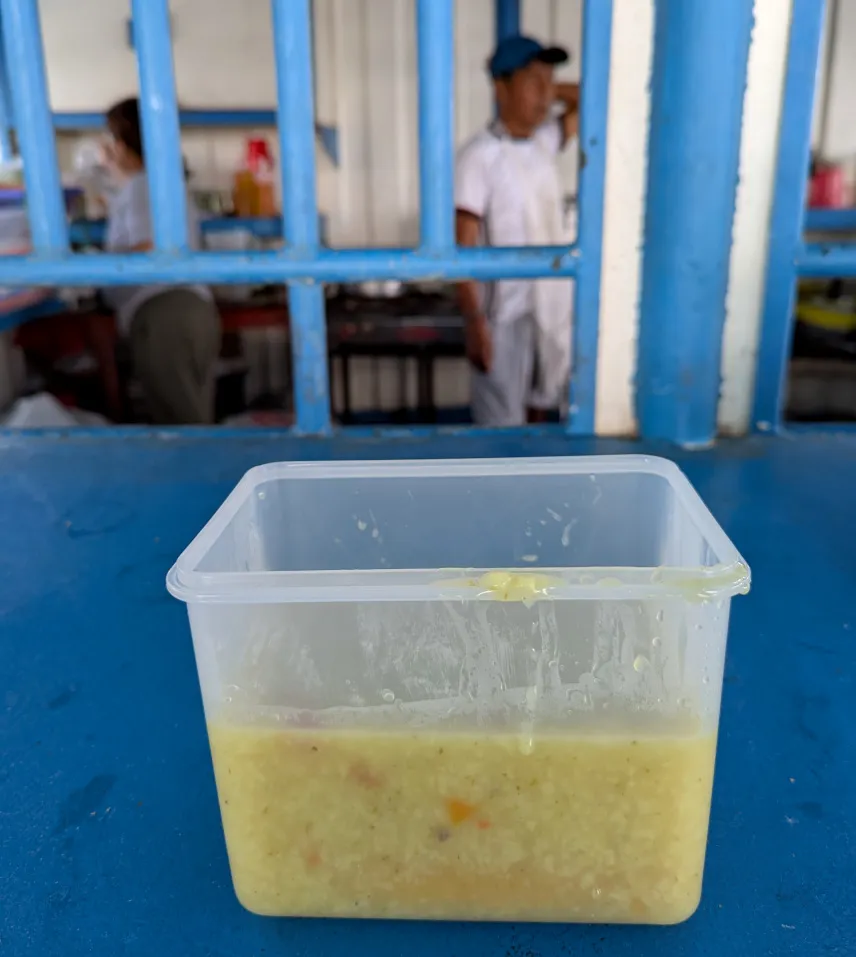
The cargo ship journey includes three meals per day (starting with the start of the actual trip and not the waiting time!).
There is only one available dish per meal which is served on a take it or leave it base. I got
- Some sweet, thin oatmeal-like soup and a bread roll for breakfast.
- Chicken or fish plus spaghetti or rice for lunch.
- Soup for dinner.
As an omnivore, I liked all of my meals.
Like with the boat’s departure, there is no meal schedule. They will call you when the food is ready.
What Are the Bathrooms Like?
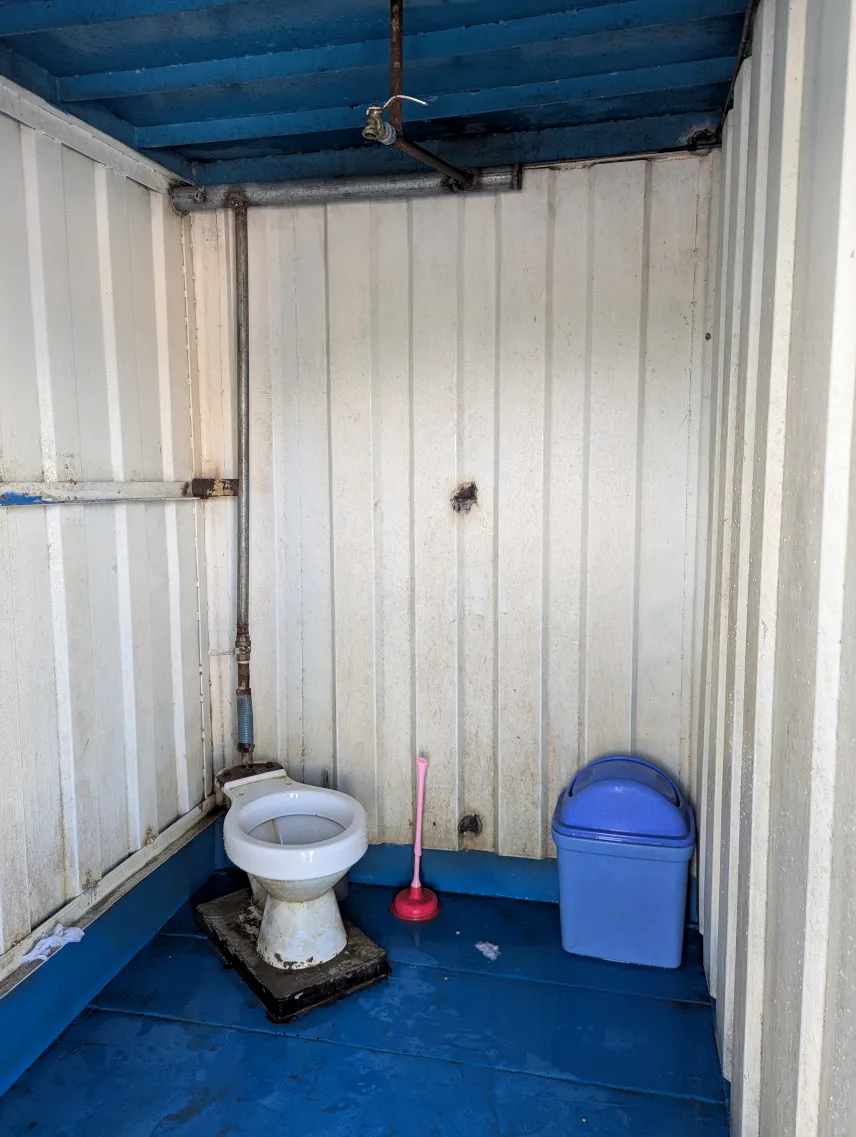
My ship only had one bathroom for women and another for men. There was a basic toilet as well as a shower where you could rinse yourself with water from the Amazon.
Is there Internet and Power?
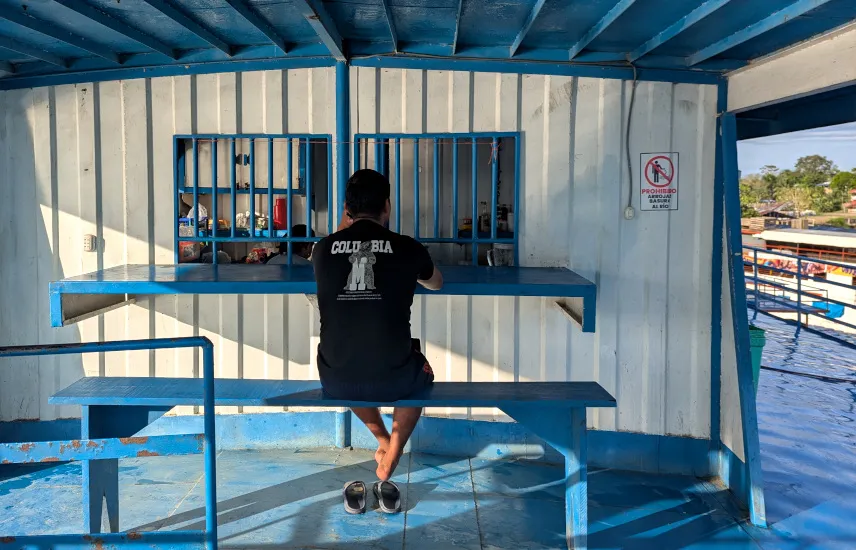
There is a limited number of power outlets on the ship. I used the ones next to the canteen so I could charge my phone while eating without leaving it unattended.
There is no WiFi on the cargo ships. The mobile internet with my eSIM card was surprisingly good, but not at all reliable. I could connect to the internet most of the first day, when we anchored at some of the settlements, as well as around Nauta.
Safety on the Cargo Ship
I heard some stories about theft from other travellers. That’s why I carried a small bag with my most important belongings with me all the time – I took it with me to the bathroom and slept with it in my hammock.
It’s a cargo ship with a lot of people, and a lot of people are coming and going – also at night. I recommend "no dar papaya," and you should be fine – at least I was.
Solo Female Travel on a Cargo Ship in the Amazon
Bucketlist2life is not a solo female travel blog, so this will only be a small section: I (Carina) went on this adventure without Philipp because he wanted to stay closer to the internet. I did not encounter any problems on my solo cargo ship trip and felt very safe all the time.
I reckon the only difference in travelling alone was that people were curious what I was doing out on the Amazon on my own, and that I had a lot of conversations with lovely strangers.
How Many Days Does it Take?
Normally, the ride takes 2 nights/3 days – and that’s also what it was like for me. As mentioned above, the boat leaves when it’s full, which might add more days to your trip. There might also be delays on the river (e.g. some years ago, protests were delaying the ships).
This journey is not for you if you’re in a time crunch!
My Itinerary
Day 1: Boarding (7 a.m.), departure (11:25 a.m.), first hours on the river.
Day 2: Full day on the Amazon, villages, sunrise, sunset.
Day 3: Approach Nauta, last stretch, arrival in Iquitos (2 p.m.).
Arrival in Iquitos – What Happens Next?
When the ship docks at the port (Puerto de Masusa in my case), things keep on moving slowly. I didn’t find any taxi drivers and was quite happy that I booked a transfer with my accommodation Flying Dog Hostel Iquitos. The tuk-tuk ride took around 10 - 15 minutes.
After days on the river, Iquitos feels loud, lively, and colourful – a stark contrast to the calm Amazon.
Our Amazon Cargo Ship Experience
Taking a cargo ship from Yurimaguas to Iquitos is not a comfortable journey. It’s noisy, messy, and at times flat-out unpleasant. You sleep in a hammock surrounded by people and chickens, the bathrooms are basic, someone always has a loudspeaker, and the food is simple. There’s no schedule or privacy, and absolutely no guarantee of comfort.
But it’s also one of the most unique and rewarding ways to experience the Amazon.
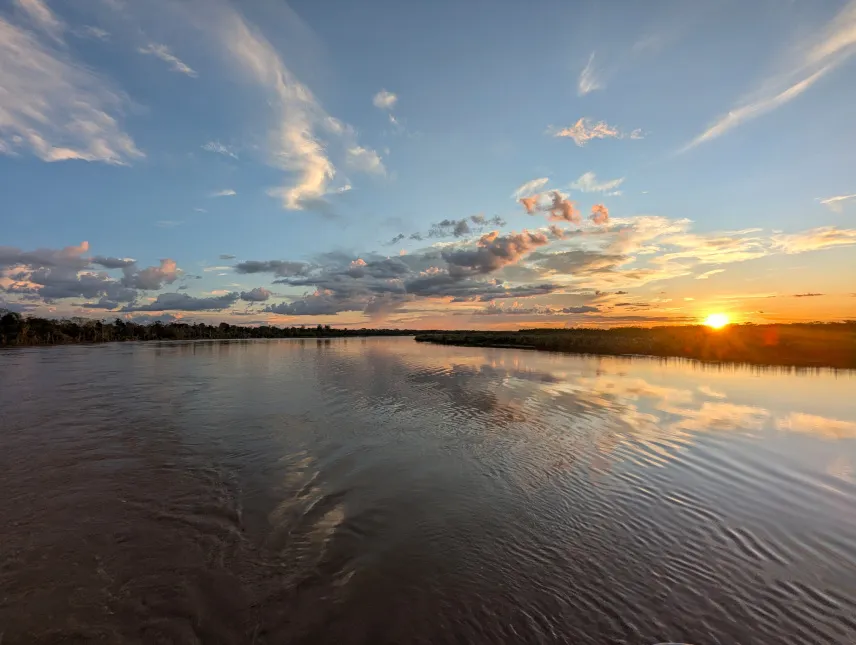
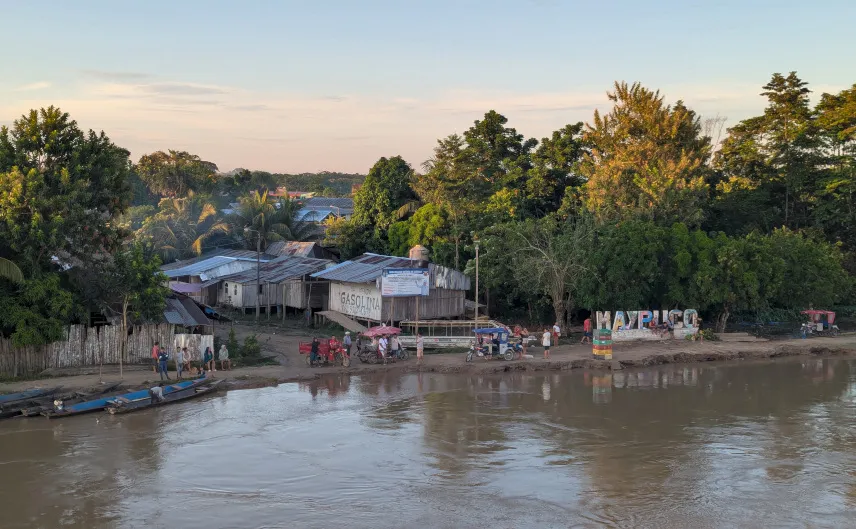
Between the chaos, we watched some of the most stunning sunrises and sunsets of our trip – soft morning mist rising from the river, and evenings where the Amazon turned gold and pink. Passing by small riverside villages is a highlight too: watching tiny boats float by, and the local life unfold around you.
It’s raw, real, and far from luxurious – but if you’re the kind of traveller who values authenticity over comfort, this journey will stick with you long after you reach Iquitos.
If you want calm and convenience, fly. If you want the Amazon as it really is, take the cargo ship.
In Conclusion: Who Should / Shouldn’t Do This
Perfect for you if…
- You want authentic Amazonian travel.
- You don’t mind discomfort.
- You enjoy slow, meditative journeys.
- You want to see local river life up close.
Not for you if…
- You need cleanliness, quiet, or privacy.
- You’re on a tight schedule.
Disclaimer: This post contains affiliate links. If you use these links to buy something we may earn a commission. You would help us a lot if you do so. Thanks.