Ultimate Travel Guide to Trujillo, Peru (+ Map)

TL;DR
Trujillo is the underrated northern Peru detour that surprises you with world-class archaeology, relaxed coastal vibes, and a far deeper cultural punch than you expect.
Planning a trip through Peru and wondering whether Trujillo is worth the detour? You’re not alone – most travellers are unsure if this northern Peruvian colonial-meets-surf city actually deserves a spot on their itinerary.
After spending several days digging into its archaeology, food scene, and coastal culture, we’ve put together a clear, practical guide based on firsthand experience – from navigating colectivos to choosing the best ruins to explore.
This guide is for curious travellers, history lovers, and anyone who wants to get off the typical Peru trail without sacrificing comfort or convenience.
And because we know northern Peru can feel overwhelming at first glance, we’ll walk you through everything with the same honesty and detail we wished we had before arriving – how long to stay, what’s truly worth seeing, and whether the city is safe to explore on your own. Let’s dive into why Trujillo might just become your favourite surprise of the trip.
Trujillo Travel Guide
Trujillo Peru Map
Is Trujillo Worth Visiting?
Trujillo is absolutely worth a visit. Peru’s third-largest city is a super convenient hub for exploring northern Peru. Additionally, it’s considered Peru’s capital of culture. The city offers the perfect blend of a colonial centre and surf town vibes in the neighbouring Huanchaco.
The main reason to visit is the amazing archaeological sites, which are completely underrated if you ask us. Chan Chan is the largest pre-Colombian city in South America – and it’s rarely visited. We shared the site with only a handful of other visitors. It was the same at the Huacas del Sol and de la Luna – the largest adobe pyramid in Peru.
So whether you use Trujillo as a stop on your way to or from Ecuador or make the detour from Lima, you will not be disappointed if you like history and getting off the beaten path!
Where We Stayed in Trujillo
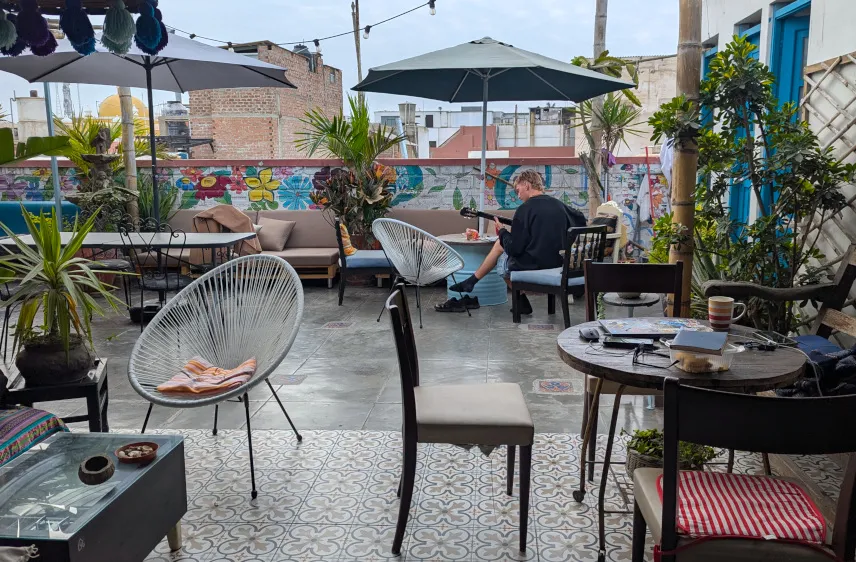
We stayed at Yaqta Hostel and can fully recommend it. It is right in the centre of Trujillo, there are lockers to store your luggage if you arrive early or leave late, and the rooftop area, including a kitchen, is amazing. The staff is incredibly helpful and will set you up with everything you need for your stay in Trujillo.
How to Get to Trujillo
Trujillo is the third-largest city in Peru. It is well connected by bus to destinations like
- Mancora or Chiclayo along the coast.
- Huaraz or Chachapoyas further inland.
- Lima
There’s also an airport in Trujillo with direct flights to and from Lima.
How to Get Around Trujillo
The historical centre of Trujillo is very walkable.
Ride-sharing apps like Uber or InDrive are available (and strongly advised) if you need a taxi.
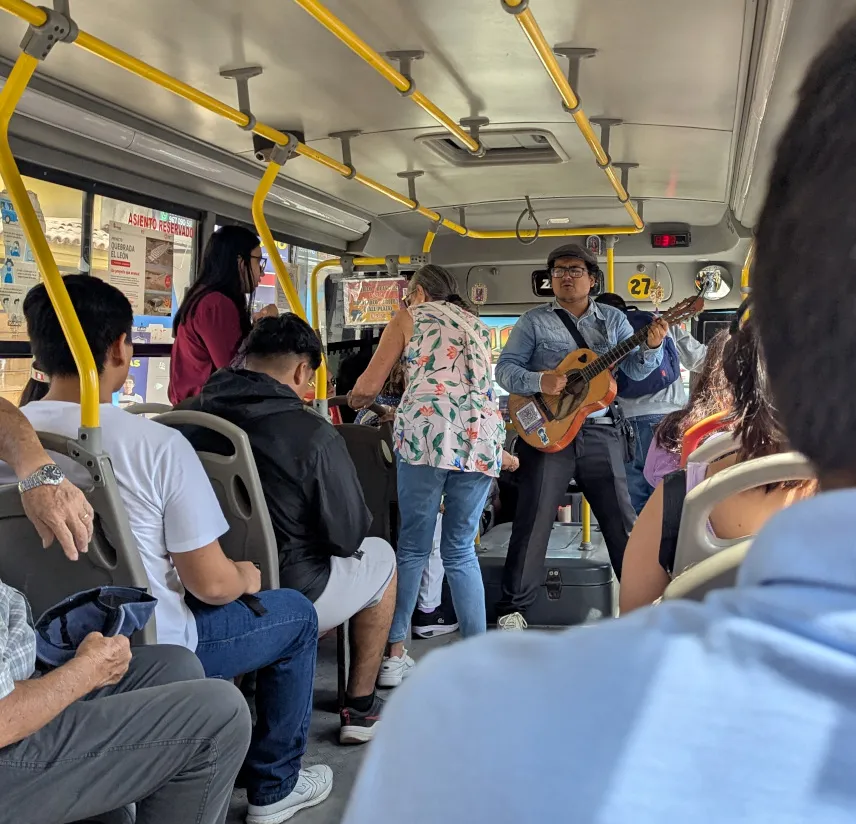
Additionally, Trujillo has an amazing public transport system. You can take buses or colectivos to all of your major points of interest like Chan Chan, the Huacas del Sol and de la Luna, as well as Huanchaco – we have marked their starting points on our map.
Things to Do in Trujillo
1. Plaza de Armas
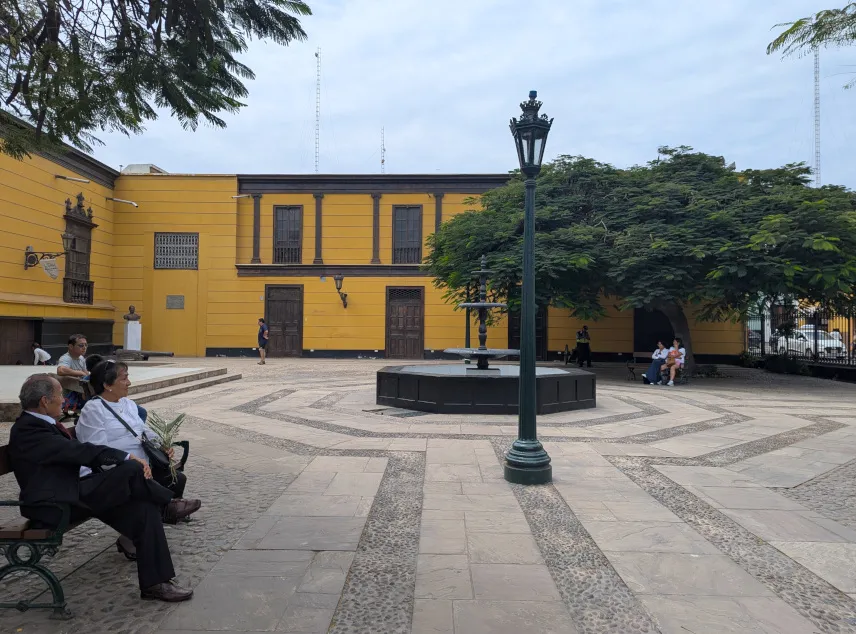
Trujillo was one of the first cities in the Americas founded by the Spanish conquistadors in 1534 and declared its independence from Spain in 1820.
At the Plaza de Armas, the heart of the city, you can find the Liberty Monument, a symbol of this independence.
Additionally, this is where Trujillo’s main church, the Basílica Catedral, with the Museo Catedralico, is located.
There are two cool free museums around the main square:
- Urquiaga House is a neoclassical colonial mansion that now houses the Central Reserve Bank museum, featuring elegant courtyards, period furnishings, pre-Inca to republican artefacts, and memorabilia from Simón Bolívar, who once stayed there.
- Casa de la Identidad Regional with art exhibitions. Unfortunately, it was closed during our visit due to conservation reasons.
Here’s a walking tour in case you prefer to explore with an English-speaking guide:
2. Jirón Francisco Pizarro
Jirón Francisco Pizarro, named after a Spanish conquistador, is the busiest pedestrian street in Tujillo.
It leads from the Plaza de Armas to the beautiful Plazuela El Recreo. The square is ideal for a break beneath its ficus trees. During the viceroyal period, it marked the start of the road to the highlands; today it preserves historic elements such as the old Caja de Agua and an Italian Baroque marble basin.
Along the way, you can spot several sights like
- Iglesia de La Merced, a richly layered Baroque monument with distinctive architecture, lavish ornamentation, and valuable sacred artworks.
- House of the Emancipation, which embodies a key part of Peru’s historical and cultural memory, as it was here that the Marquis of Torre Tagle proclaimed Peru’s independence.
- Palacio Iturregui, which was built in 1842 in the Neoclassical style. It’s not open to the public, but you can see its large windows with wrought iron finials.
3. Wander Around Trujillo’s Historical Centre
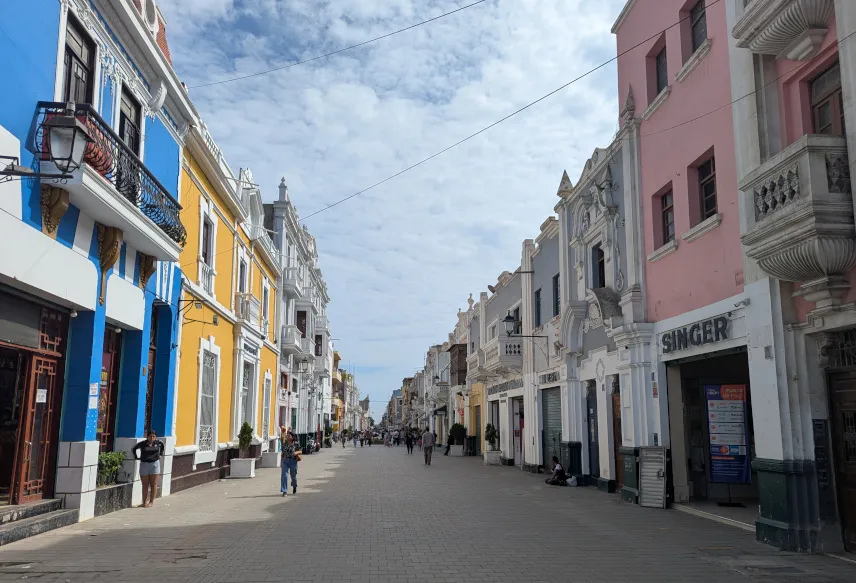
While we think that the Plaza de Armas, Jirón Francisco Pizarro, and Plazuela El Recreo are the main events in Trujillo, the historical centre is super pleasant to wander around and get lost for a bit. Here are some of our favourite spots to find (of course, they are all marked on our map):
- Ganoza Chopitea House, also known as “La Casa de los Leones”, is probably the most representative colonial house in Trujillo. Its baroque facade with the two lions is stunning. The interior is currently closed to the public.
- Casona Mariscal de Orbegoso is a small palace, with a neoclassical facade adorned with pinnacles and a semicircular crowning element. It was once owned by Marshal José Luis de Orbegoso y Moncada, the only person from La Libertad to have served as President of Peru (1833-1835). The interior was closed when we visited. It’s located right next to San Agustin Church.
- The Museum of Archaeology of the National University of Trujillo, housed in the colonial Casa Risco, showcases over 20,000 artefacts from northern Peru’s pre-Hispanic cultures across ten exhibition halls, tracing the region’s development from 10,000 B.C. to the Spanish conquest.
- Monasterio De Nuestra Señora del Carmen, an 18th-century church and monastery showcasing exquisite baroque architecture.
4. Chan Chan
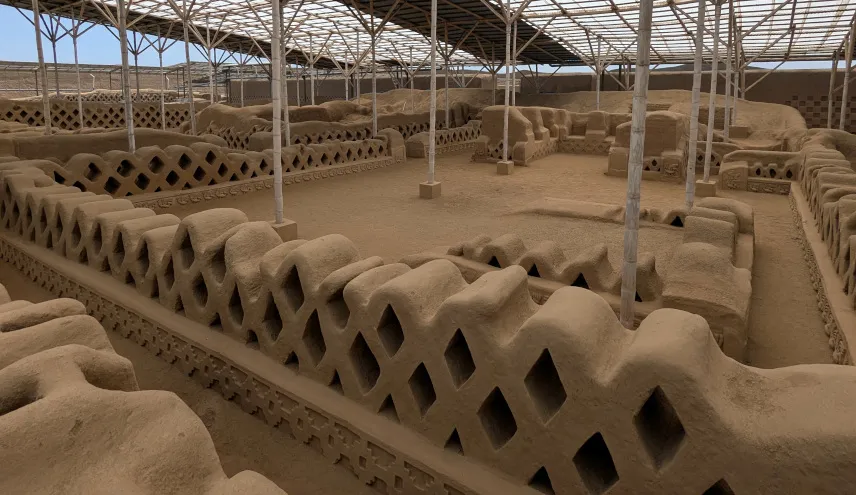
Chan Chan was the capital of the Chimor Kingdom – and the largest city in pre-Columbian South America. It was built around 900 and thrived until its conquest by the Inca in 1470. At its peak, Chan Chan covered around 20 square kilometres, with a dense urban core dominated by impressive ciudadelas – walled royal compounds featuring plazas, storerooms, and burial platforms. Artisans and commoners lived and worked in more modest, clustered dwellings.
How to get to Chan Chan:
- Colectivo (we have marked the entry point on our map). The walk from the drop-off point on the main road is rather long, and we did not see any taxis there.
- Taxi (Uber or InDrive).
- Guided tour with an English-speaking guide.
5. Chan Chan Site Museum
The Chan Chan Site Museum displays a rich collection of original artefacts uncovered at Chan Chan, such as wooden idols, ceramics, textiles, metal objects, and building materials, including adobe bricks, ropes, and beams. Detailed scale models throughout the museum help visitors better understand the layout, structure, and function of Chan Chan’s citadels and other parts of the city.
Other galleries trace the pre-Hispanic cultural development of the La Libertad region, from early stone tools to the refined ceramics of the Moche and Chimú civilisations.
How to get to the Chan Chan Site Museum:
- Colectivo. The Chan Chan Site Museum is almost next to the colectivo drop-off point on the main road. You can walk from Chan Chan.
- Taxi (not sure if Uber or InDrive do the short distance from Chan Chan).
- The guided tour stops here.
6. Huaca del Sol and de la Luna
The Huaca del Sol and de la Luna, as well as the Museo Huacas de Moche, are part of the same complex.
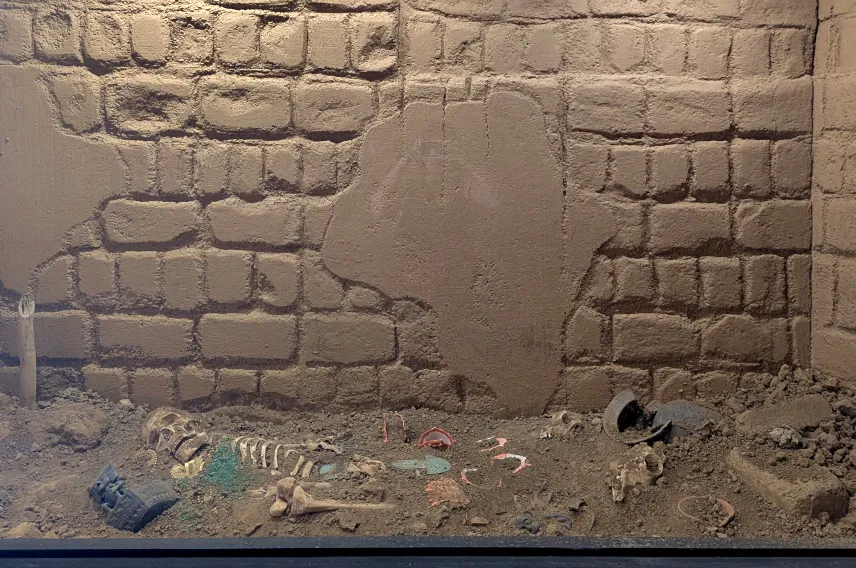
The Huaca de la Luna, or the “Temple of the Moon,” is one of northern Peru’s most important Moche archaeological sites. Primarily a ceremonial and religious centre, Huaca de la Luna is famous for its striking murals and reliefs, once vividly painted in red, yellow, blue, white, and black. Many depict powerful Moche deities, especially Ai Apaec, the fearsome figure associated with sacrifice and authority. Excavations have revealed elite burials, ritual spaces, and dramatic evidence of ceremonial human sacrifice, shedding light on Moche religious life and social hierarchy. Built entirely of adobe between about 100 and 800 CE, it formed part of the ancient Moche capital known today as the Huacas de Moche, alongside the larger Huaca del Sol.
The larger Huaca del Sol, or the “Temple of the Sun,” is closed to visitors.
The Museo Huacas de Moche provides context for the nearby ruins. The exhibits feature well-preserved artefacts, including ceramics and metalwork, which showcase the artistic skills and daily life of the Moche people.
How to get to the Huacas:
- Colectivo (we have marked the entry point on our map).
- Taxi (Uber or InDrive).
- The same guided tour that stops at Chan Chan also stops here.
7. El Brujo
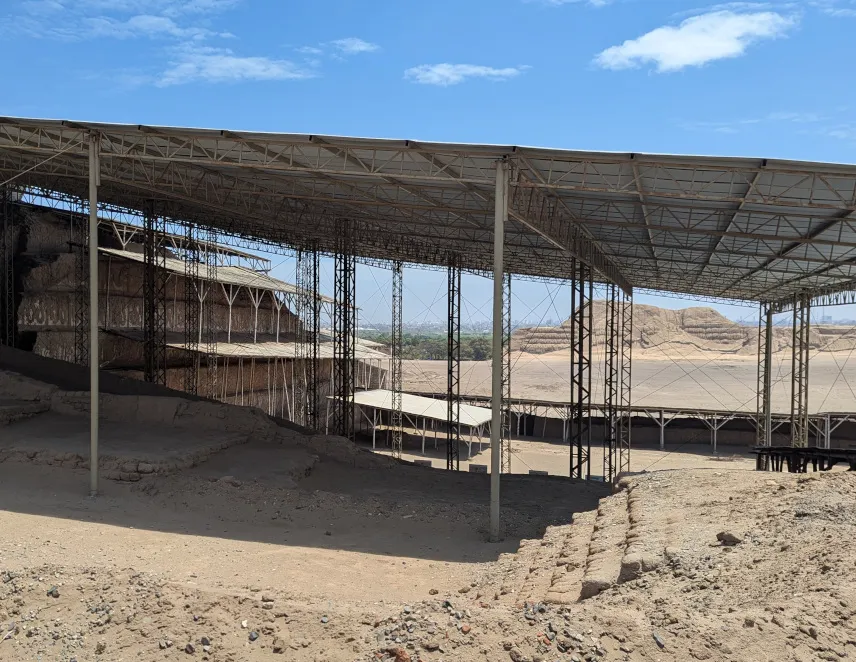
The El Brujo Archaeological Complex, north of Trujillo in the Chicama Valley, showcases thousands of years of history. Its main Huacas – Huaca Prieta, Huaca Cortada, and Huaca Cao Viejo – span from preceramic times to the Moche era. Huaca Cao Viejo is famous for colourful murals and the discovery of the Señora de Cao, Peru’s earliest known female ruler. Later cultures, including Lambayeque, Chimú, and Inca, continued to use the site for ceremonial and funerary purposes.
How to get to the El Brujo:
- Taxi (Uber or InDrive).
- Guided tour with an English-speaking guide.
8. Huaca Esmeralda
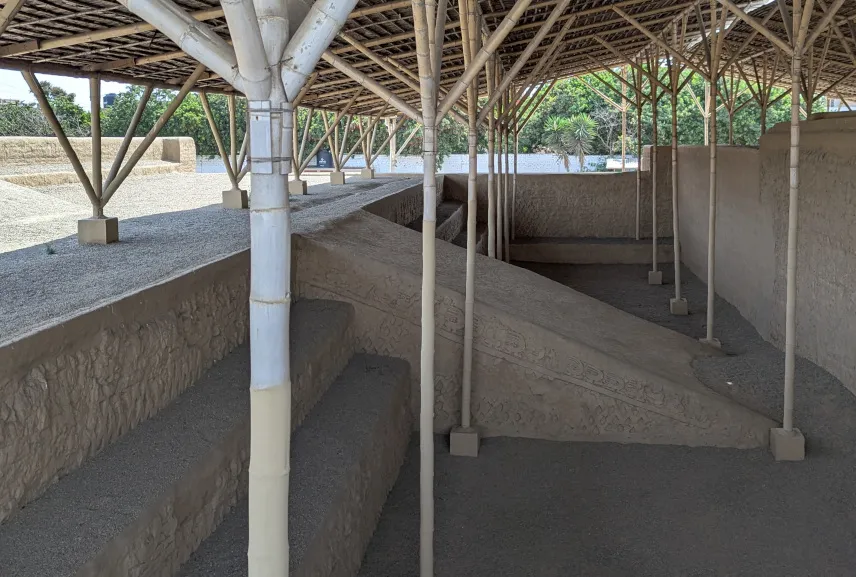
Huaca Esmeralda is an adobe structure from the early Chimú culture, closely linked to the capital, Chan Chan. It may have served as the palace of a local Chimú lord. The site features three terraces decorated with geometric and zoomorphic reliefs, connected by a steep ramp.
How to get to Huaca Esmeralda:
- Colectivo (The same one that goes to Chan Chan. Stop at Mansiche Church and walk for around 5 minutes. Supposedly, the area is not the safest.)
- Taxi (Uber or InDrive).
- A guide is useful as there’s no English information and very little Spanish information. E.g. there’s this Full Day of Archaeology tour.
9. Huaca del Dragón or Huaca Arco Iris
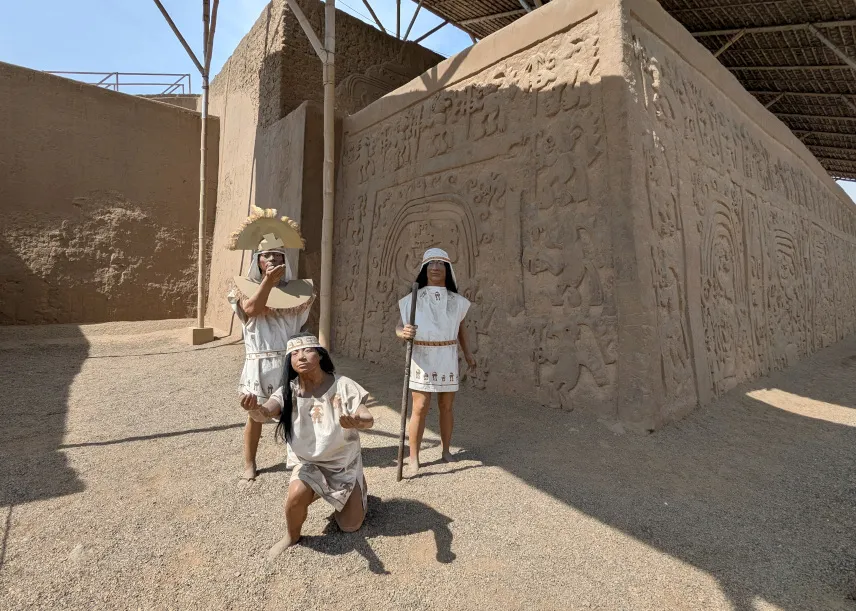
The Huaca del Dragón, also known as Huaca del Arco Iris or the Rainbow Temple, is a Chimú archaeological site like Chan Chan. Built of adobe in the 12th century, it served as a religious, administrative, and ceremonial centre.
The temple features murals and friezes in relief, including a dragon crowned by a rainbow, which gives the site its name.
How to get to Huaca Arco Iris:
- Colectivo (You have to find a colectivo going to La Esperanza. They go down Av. Nicolás de Piérola, e.g. from Estadio Mansiche).
- Taxi (Uber or InDrive).
- A guide is useful as there’s no English information and very little Spanish information. E.g. there’s this Full Day of Archaeology tour.
10. Huanchaco
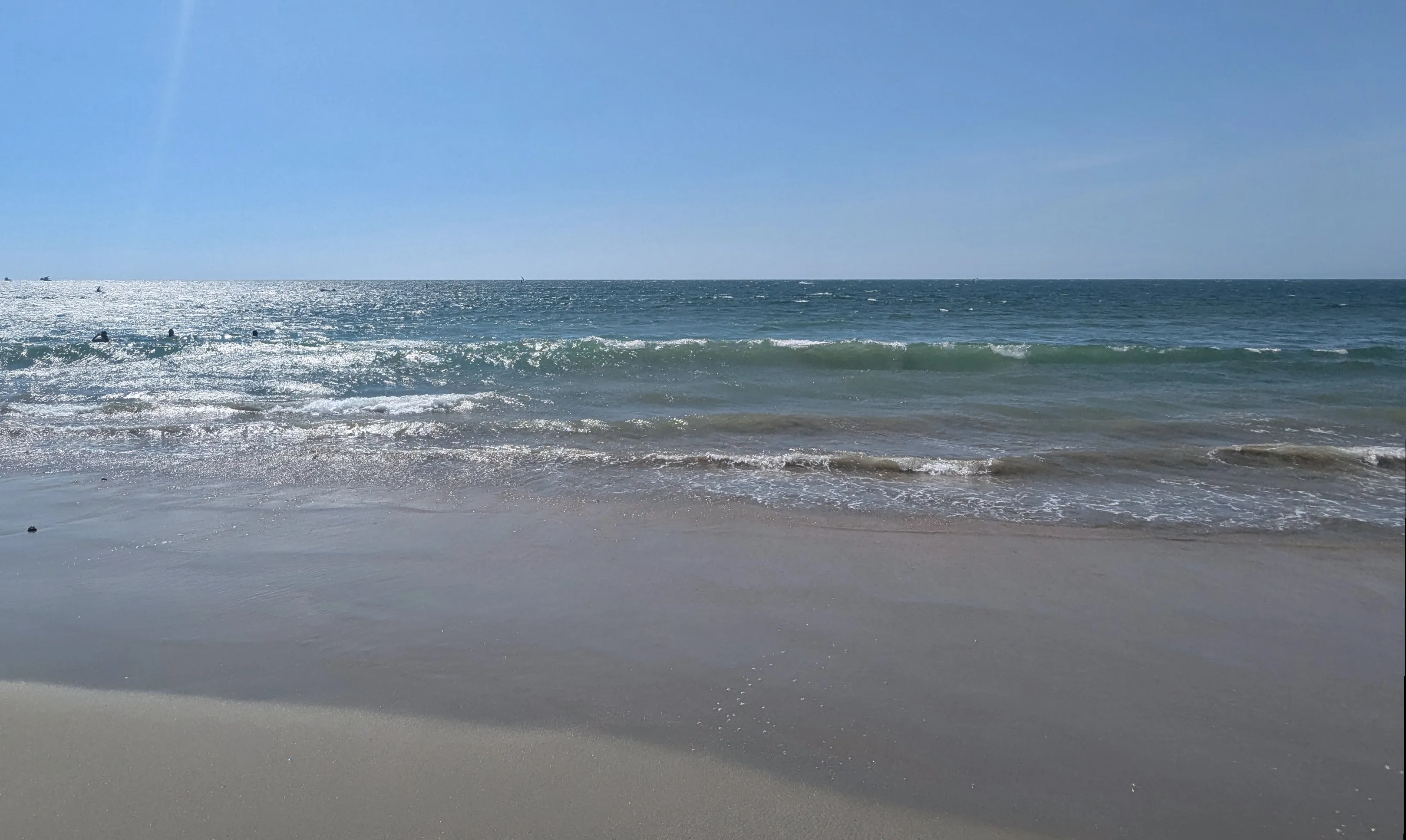
Huanchaco is a charming seaside town just north of Trujillo. It is famous for its surfing, traditional caballitos de totora reed boats, and as the birthplace of ceviche.
Once the main port for the ancient Chimú city of Chan Chan, Huanchaco has a rich pre-Columbian history. Today, it’s a hotspot for tourists and surfers alike, earning the title of World Surfing Reserve in 2012.
How to get to Huanchaco:
- Colectivo (the same one that goes to Chan Chan).
- Taxi (Uber or InDrive).
- The guided tour that visits Chan Chan and the Huacas stops here.
Where to Eat in Trujillo
There are tons of amazing food options around Trujillo, but we mostly stuck with local food, ceviches, and super affordable menus del dia. Here are our favourites:
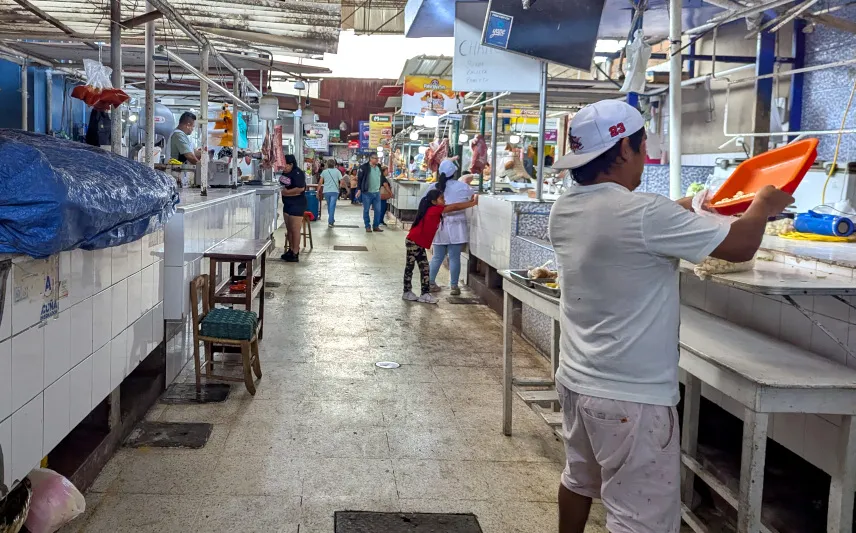
- This is a no-brainer, but you will get the widest selection of affordable local dishes at the central market.
- For affordable menus del dia, we liked San Martín, El Rincón de Vallejo, and Don Aníbal, which are all very close to our hostel.
- Again, close to our hostel, we had some nice ceviche at Cevicheria Puerto Mori.
How Many Days in Trujillo Do You Need
If your time is extremely limited, you could probably cram all the main sights into just one day.
We think two days is the sweet spot to enjoy the city centre and the main historical sights at a somewhat leisurely pace.
If you like to explore more of the archaeological sights in depth or spend more time relaxing at the beach in Huanchaco, you can easily spend three days or more without getting bored.
Trujillo Itinerary
Day 1 – Chan Chan and Huacas
Dedicate your first day in Trujillo to visiting the must-sees, Chan Chan, as well as the Huacas del Sol and de la Luna.
A guided tour is a convenient option to explore the archaeological sites with an English-speaking guide – especially if time is of the essence.
Day 2 – Trujillo’s Historical Centre
Dedicate some time to exploring Trujillo’s historical centre with or without a guide.
Trujillo Tips
ATMs in Trujillo
There are several ATMs dotted around Trujillo. We used the Banco de la Nación one around the corner from our hostel.
Supermarkets in Trujillo
There’s a huge Plaza Vea on the outskirts of the city centre where you can get everything you need.
Internet in Trujillo
We had great internet both in our accommodation and with our eSIM card.
Is Trujillo Safe
Personally, we did not encounter any issues. Trujillo does not have a good reputation, though. We did hear a lot of stories about petty theft, even from locals – and a lot of locals also warned us to be extra careful. You also hear stories about gang-related crimes, but those should be quite hard for you to encounter as a tourist.
This post contains affiliate links. If you use these links to buy something, we may earn a commission. You would help us a lot if you did so. Thanks.