Peru Itinerary: 3 Weeks – North and South (+ Map)

TL;DR
Our Peru itinerary for 3 weeks packs Machu Picchu, the Amazon, deserts and mountains, as well as Northern Peru’s best-kept secrets into one fast-paced, adventure-filled trip you won’t want to miss.
Planning a Peru travel itinerary can feel overwhelming at first. Do you chase the bucket-list classics, head off the beaten path, or somehow squeeze everything into one trip? If you’ve got three weeks and don’t want to spend half of them stuck in planning mode, this guide is for you.
Our 3 week Peru itinerary is fast-paced, packed with highlights, and designed to help you see as much of the country as realistically possible without burning out. One of the biggest pain points we see? Travellers skip entire regions because they’re harder to plan. That’s exactly why this itinerary goes beyond the usual Cusco – Machu Picchu loop and dives deep into northern Peru, one of the country’s most underrated areas, full of archaeological sites, waterfalls, jungle towns, and true hidden gems.
We’ve personally travelled this route, tested the buses, flights, and tours, and optimised the order so you can move efficiently while still having unforgettable experiences. From ancient cities like Chan Chan and Kuelap to the Amazon rainforest, a desert oasis, high-Andes landscapes, and vibrant cities, this 3 weeks in Peru itinerary shows you what’s possible with smart planning.
Whether you’re backpacking, travelling independently, or just want a no-nonsense plan that actually works, this itinerary is built for curious, adventurous travellers who want more than the obvious. Let’s dive into all the highlights – and the hidden gems most people miss.
3 Weeks Peru Itinerary
Peru Trip Itinerary Map
2 Days in Trujillo
Day 1 – Chan Chan & the Huacas del Sol and de la Luna
Trujillo is an absolute highlight in northern Peru, especially for archaeology enthusiasts. What is now Peru’s third-largest city used to be the hub for several civilisations. Chan Chan, the former capital of the Chimu culture, is the largest pre-Colombian city in South America – and it’s rarely visited. We shared the site with only a handful of other visitors. It was the same at the Huacas del Sol and de la Luna, built by the Moche civilisation.
In case you’re a beach person, you can also check out Huanchaco right next to Trujillo!
If your time is limited, we highly recommend a guided tour to explore the archaeological sites as well as Huanchaco with an English-speaking guide.
Here’s our full Trujillo travel guide:
Day 2 – Trujillos Historical Centre & Nightbus to Chachapoyas
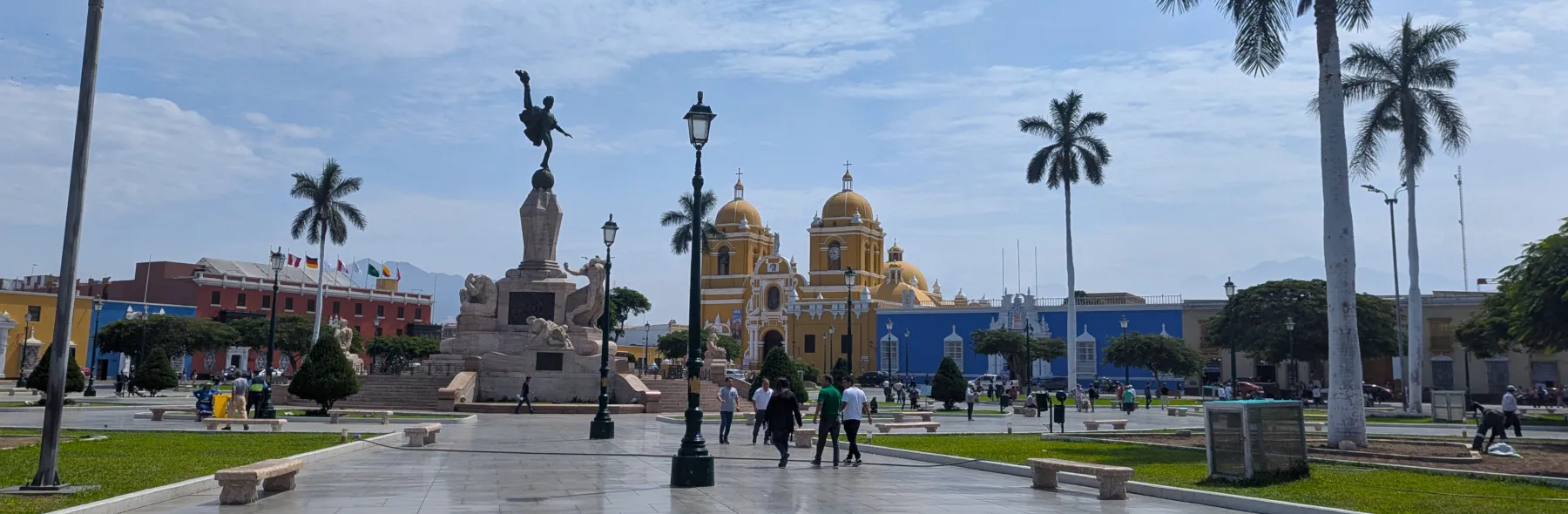
Use your second day in Trujillo to explore the beautiful historical centre. Start at the Plaza de Armas, walk down the pedestrian Jirón Francisco Pizarro, explore the many beautiful churches (like the cathedral or the Monasterio De Nuestra Señora del Carmen) and visit some of the (free) museums.
If you like to explore with an English-speaking guide, here’s a guided tour:
In the evening, hop on a night bus to Chachapoyas.
2 Days in Chachapoyas
Day 3 – Kuelap Fortress
Chachapoyas serves as a convenient base for exploring the incredible sights in the surrounding region, including archaeological sites and waterfalls.
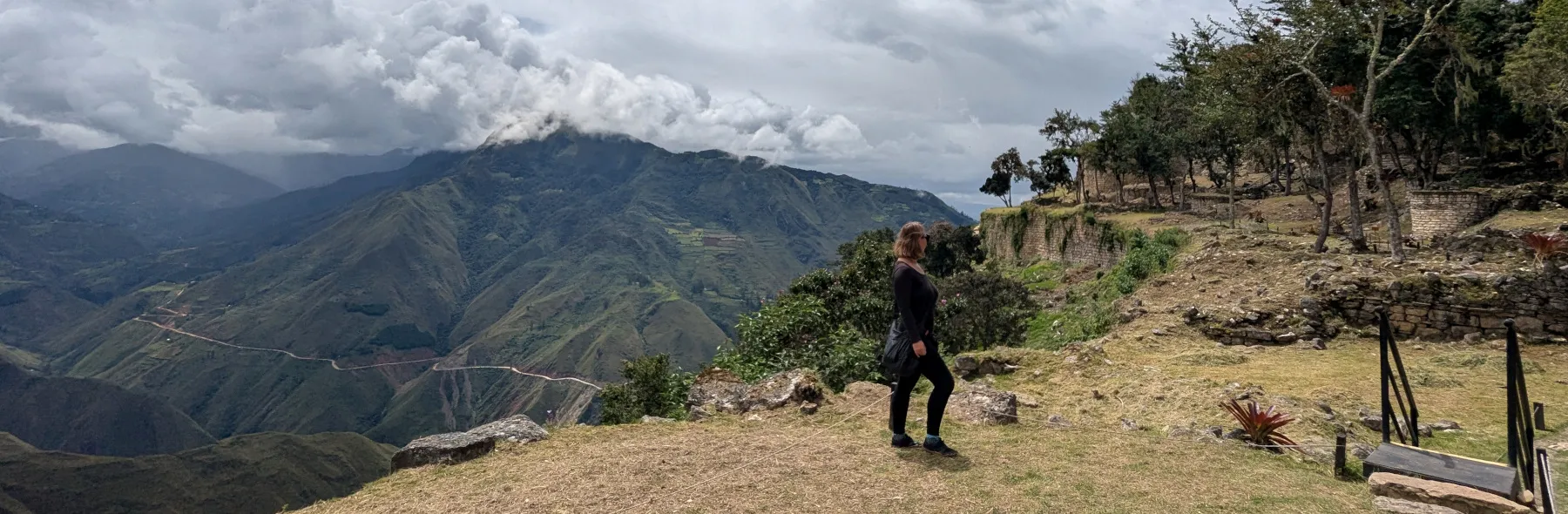
Time is limited, so hop off the night bus and on the tour to Kuelap, the Machu Picchu of the north. One of the highlights is riding the cable car to the archaeological site.
Kuelap is an ancient Chachapoyas stronghold – the civilisation that inhabited the area before the Incas. The Kuelap fortress perches on a ridge and once contained over 300 individual dwellings spread across three levels.
We opted for a Kuelap Fortress Full-Day Tour, as an individual visit will cost you a lot of time but not save you a lot of money:
We have written a full Kuelap tour review:
Day 4 – Gocta Waterfall & Nightbus to Tarapoto
The Gocta waterfall is considered the third-highest waterfall in the world. It is 771 m (2530 ft) high and plunges down two cascades. Beware that the hike there and back from the trailhead is around 10 km (6.2 miles) with quite some ups and downs.
The waterfall, visible from kilometres (or miles 😉) away, is surrounded by legends – locals once feared a mermaid spirit guarding the falls.
You can go independently by colectivo and motortaxi. We chose a guided tour, which is a great option if you prefer to go with an English-speaking guide.
In the evening, hop on a night bus to Tarapoto.
Here’s our full Chachapoyas travel guide:

4 Days in Iquitos
Day 5 – Travel to Iquitos and Explore the Centre & Belen
Iquitos is the hub to explore the Peruvian Amazon!
Personally, we took the cargo ship from Yurimaguas (2 hours north of Tarapoto) to Iquitos, which is a great adventure but also takes three days.
Here’s our full Amazon cargo ship travel guide:
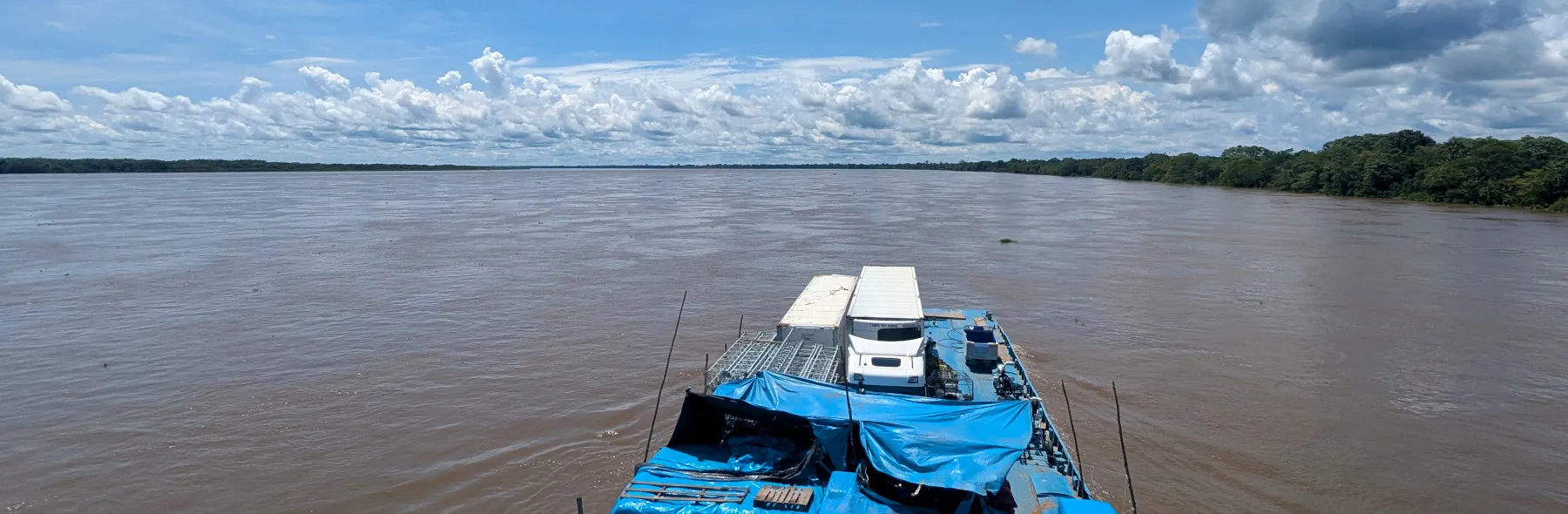
Iquitos is the largest city in the world that cannot be reached by road, so if you don’t have the time to take the boat, your only option is flying. There’s only one direct flight per day from Tarapoto to Iquitos, so book in advance!
Once you arrive in Iquitos, start by exploring the historical centre, including the Plaza de Armas, the malecon, and Iquitos’ museums. Keep your eyes open for the beautiful azulejo-covered buildings that are remnants of the rubber boom.
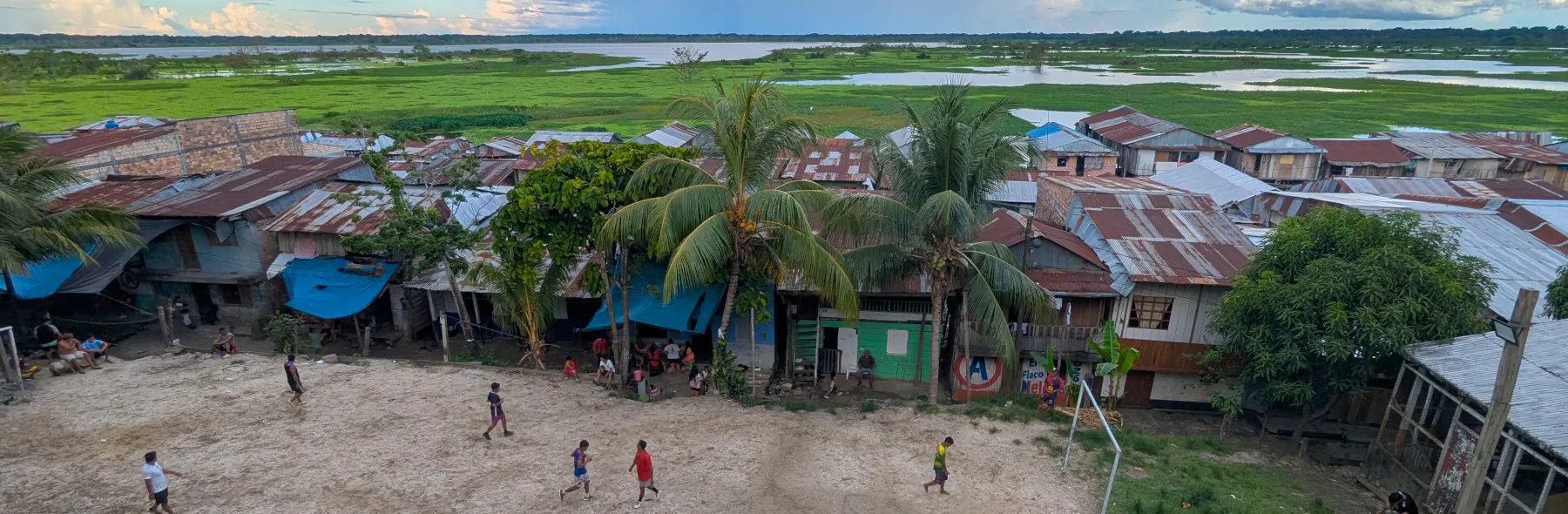
In the afternoon, head to Belen, where you can visit the market where produce from the Amazon is traded. You can also take a boat tour through what is euphemistically called the Venice of the Amazon.
You can go on your own, but this place is super overwhelming and confusing. We highly recommend going on a tour!
Here’s our full Iquitos travel guide:
Day 6-8 – Amazon Rainforest
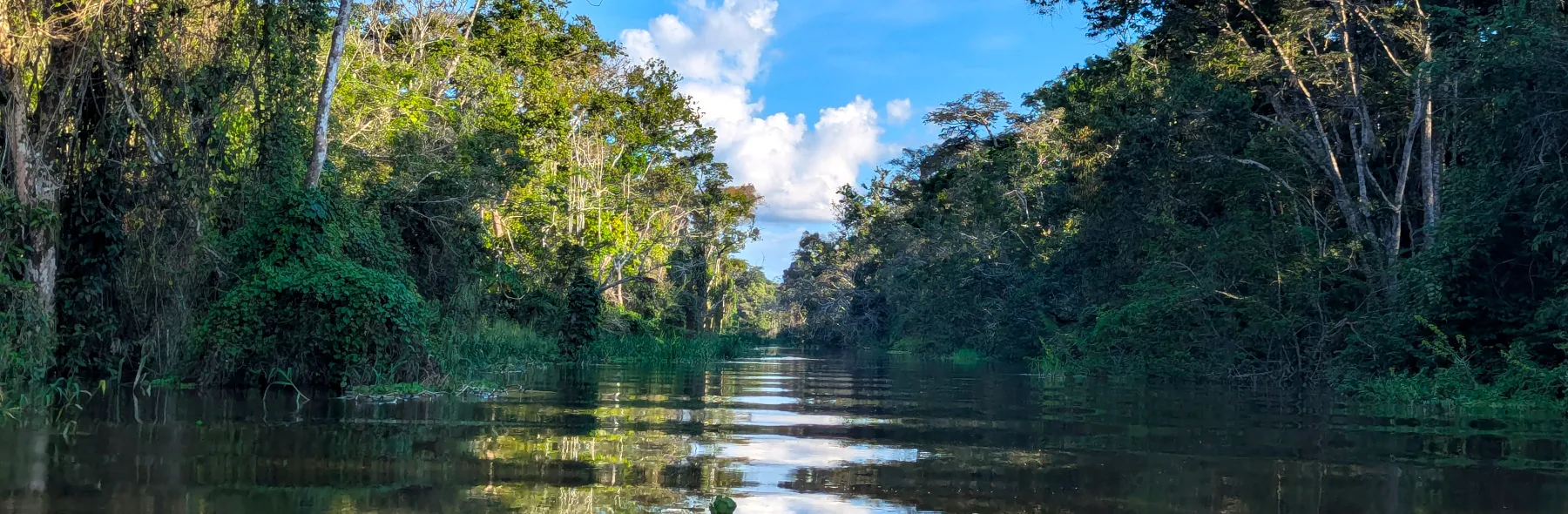
The reason to come to Iquitos is to visit the Amazon rainforest. Some of the most common animals to spot are pink river dolphins, monkeys, birds, sloths, and caimans – our group also spotted an anteater.
As you can’t just walk out in the wilderness alone, your only option is to go on a guided tour. Your guide will know the best places to spot wildlife. You can also add a layer of cultural exploration when you choose a tour that visits a local village.
We highly recommend that you spend at least one or two nights in the jungle, firstly to really immerse yourself in the experience and secondly to improve your chances of spotting wildlife. There are many comfortable lodges you won’t want to leave (the one on our tour sure was).
Here’s our full Amazon tour review:
After the tour, ask to be dropped off at the airport for your flight to Lima.
2 Days in Lima
Day 9 – Free Walking Tour & Centro Historico
Lima, as the capital, is well worth a spot on your Peru three week itinerary.
We recommend a free walking Tour of Lima’s Historic Centre to get an overview of the most important sights, including the Plaza de Armas, Jirón de la Unión, and the Iglesia de la Merced.
In the afternoon, tour through the catacombs of the Monastery of San Francisco. We also highly recommend that you visit some of the amazing museums, like the Museo Arqueológico Rafael Larco Herrera or the Museo de Arte de Lima.
Here’s a full 2-day Lima itinerary:
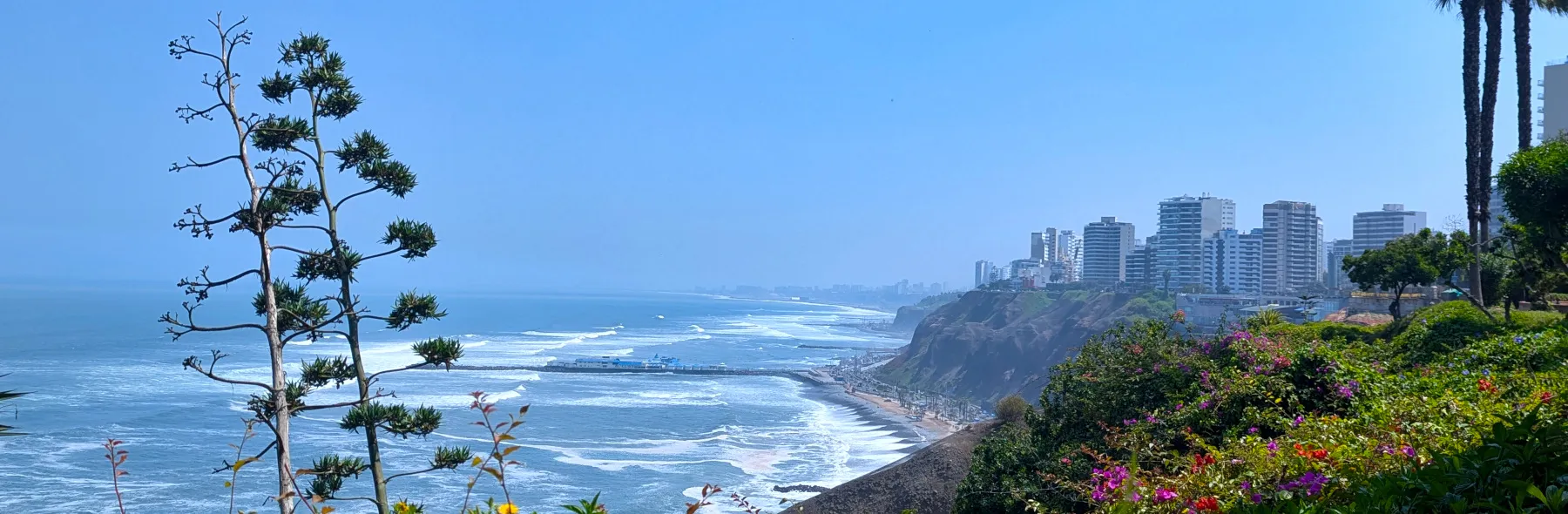
Day 10 – Barranco, Miraflores, and Bus to Paracas
Barranco is the Bohemian quarter of Lima. It is full of street art – especially around the Bridge of Sighs and the Bajada de los Baños. Other cool spots to explore are the Plaza Barranco, the La Feria Unión de Barranco, and the Barranco Malecon.
Head on to the neighbouring Miraflores, the affluent and touristy part of Lima. Walk along the Malecon with the Love Park and the La Marina Lighthouse, shop at Larcomar, and visit Kennedy Park, which is mostly famous for its many cats.
If you’re into archaeology, you shouldn’t miss the ruins of Huaca Pucllana. This massive adobe and clay pyramid, built between 200–700 AD, once served as a ceremonial and administrative hub for the Lima Culture.
In the evening, catch a bus to Paracas. Depending on the time, you might have to catch a bus to Pisco and take a taxi from there.
Here’s our full Paracas travel guide:
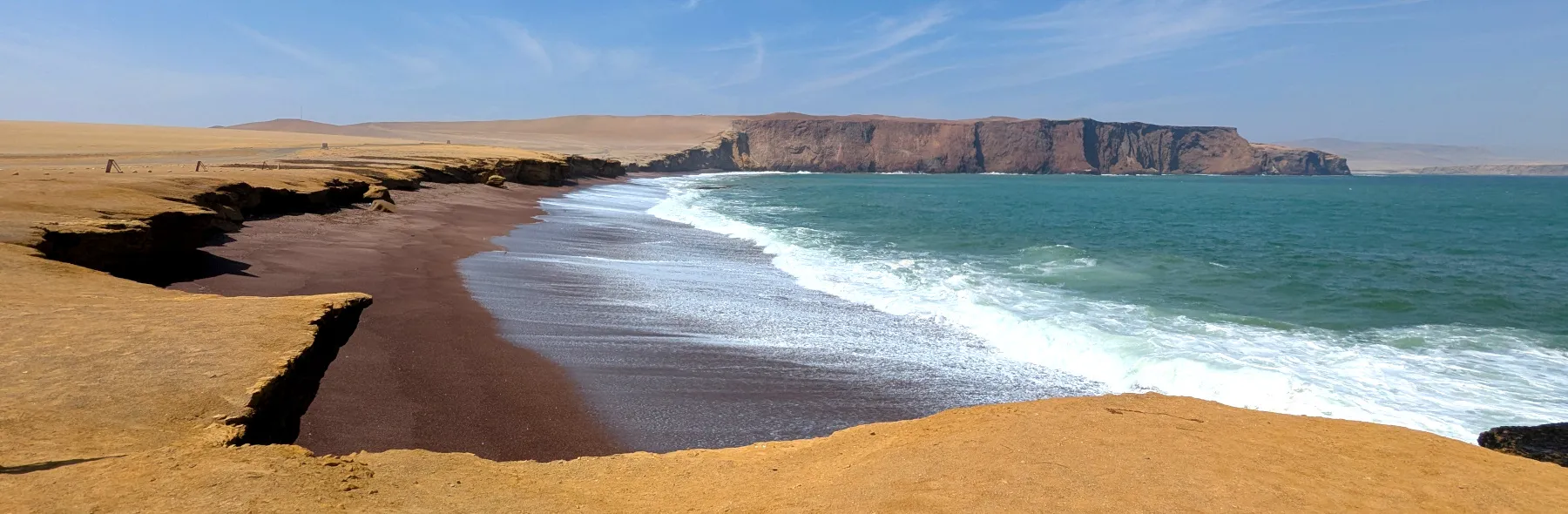
1 Day in Paracas
Day 11 – Ballestas Islands & Paracas National Reserve
Today, it’s time to visit the Ballestas Islands & Paracas National Reserve on a tour!
Start with the Ballestas Islands, often called the “Poor Man’s Galápagos”. Spot sea birds, including penguins and boobies, sea lions, as well as the candelabra geoglyph.
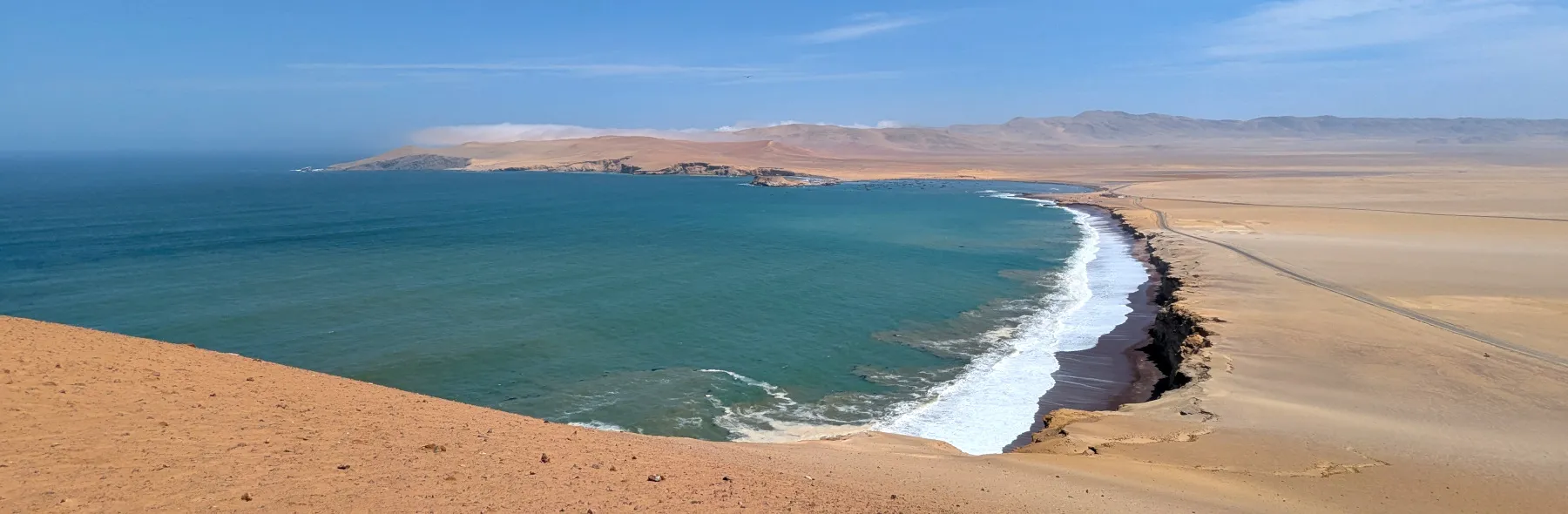
In the Paracas National Reserve, visit different viewpoints and beaches.
We have written a full review of our Paracas tour:
1 Day in Huacachina
Day 12 – Bus to Huacachina & Sandboarding
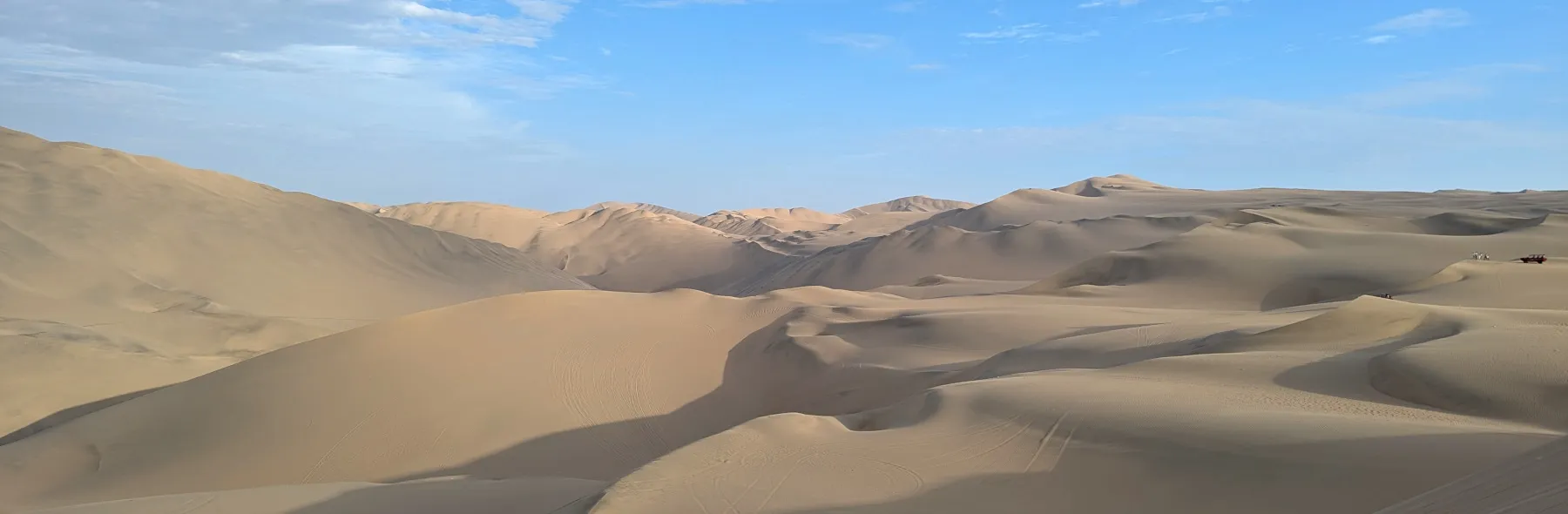
In the morning, hop on a bus to Huacachina – a desert oasis surrounded by sand dunes.
Here’s our full Huacachina travel guide:
Relax your day away in one of the oasis accommodations – we chose Banana's Adventure Hostel.
The afternoon is when the adventure begins: a tour through the sand dunes!
The typical tour includes:
- Racing through the sand dunes on a buggy.
- Sandboarding.
- Watching the sunset above the oasis.
1 Day in Nazca
Day 13 – Nazca Lines Tour & Bus to Arequipa
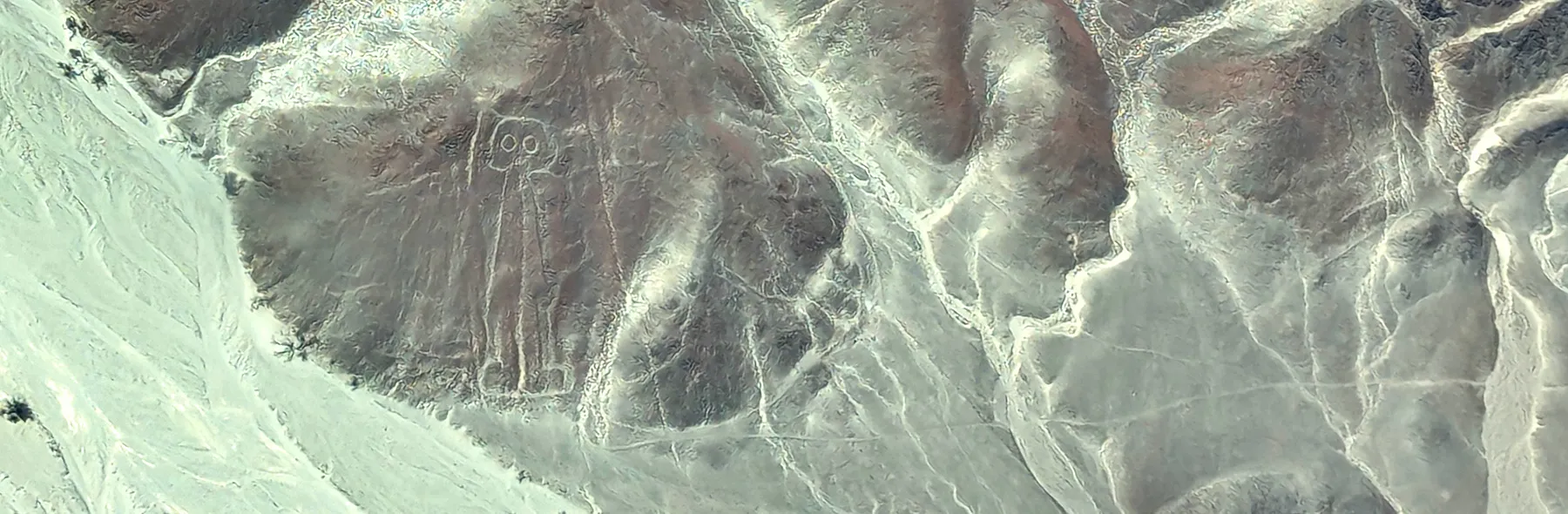
Our Naza Lines tour from Huacachina was one of our highlights in Peru. The Nazca Lines are a group of over 700 geoglyphs created between 500 BC and 500 AD. The best way to see them is on a flight.
The tour we did started in Huacachina and ended in Ica – perfect if you want to catch the bus to Arequipa after your flight.
Here’s our full review of our Nazca Lines tour:
2 Days in Arequipa
Day 14 – Free Walking Tour & Centro Historico
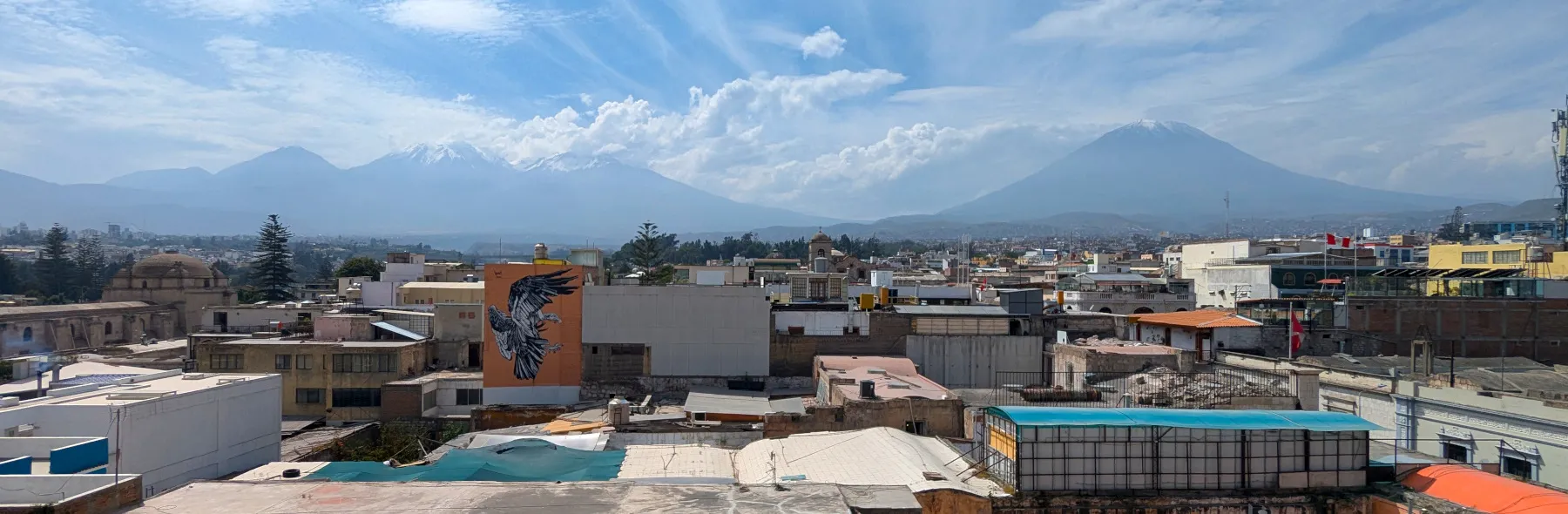
Arequipa, with its beautiful historical centre, is also called the “White City”. Again, we recommend that you start your time in a new city with a free walking tour.
These are some of the spots you need to explore:
- Plaza de Armas & Basílica Catedral de Arequipa.
- Casa Tristan del Pozo art gallery.
- The pedestrian Calle Mercaderes.
- Monasterio de Santa Catalina.
- Mirador Yanahaura with stunning views across Arequipa.
Here’s our full Arequipa travel guide:
Day 15 – Colca Canyon Tour with Transfer to Puno
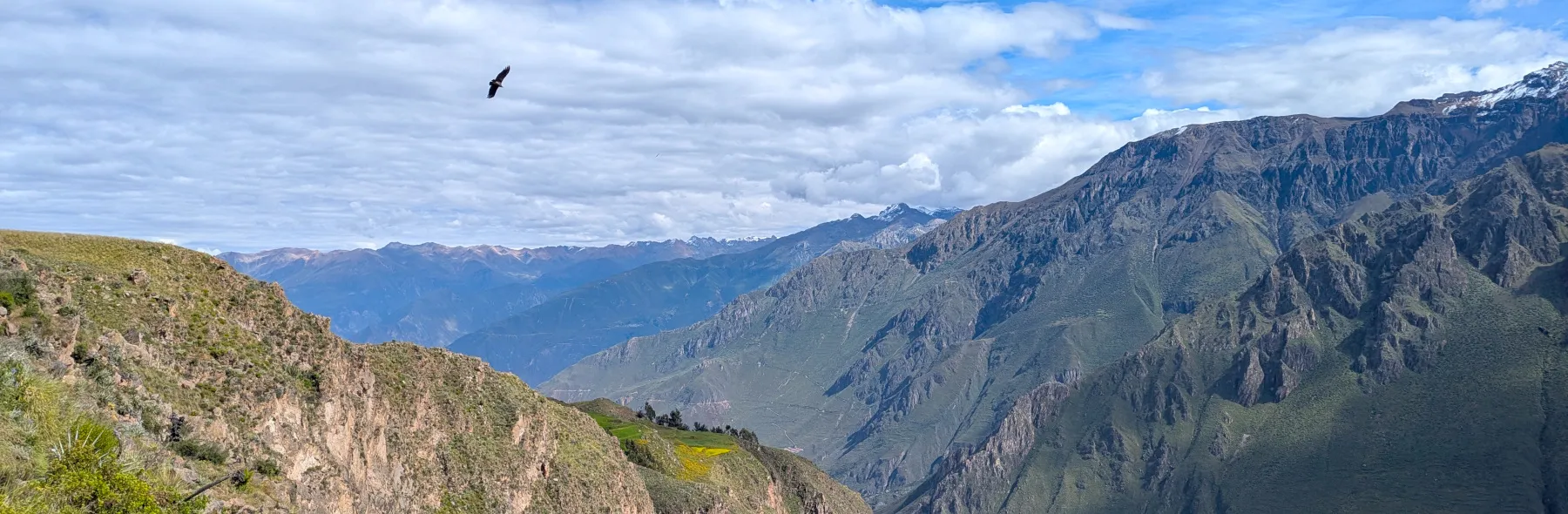
Colca Canyon is one of the deepest canyons in the world. A day trip is the most convenient way to see its highlights – especially if you’re not big on hiking.
You can spot condors, visit cute villages, soak in hot springs, and stop at cool viewpoints – all in just one day!
Here’s a full review of the Colca Canyon day trip we did (we went back to Arequipa, but would save ourselves the hustle and go directly to Puno the next time):
1 Day in Puno
Day 16 – Exploring Lake Titicaca, Centro Historico & Nightbus to Cusco
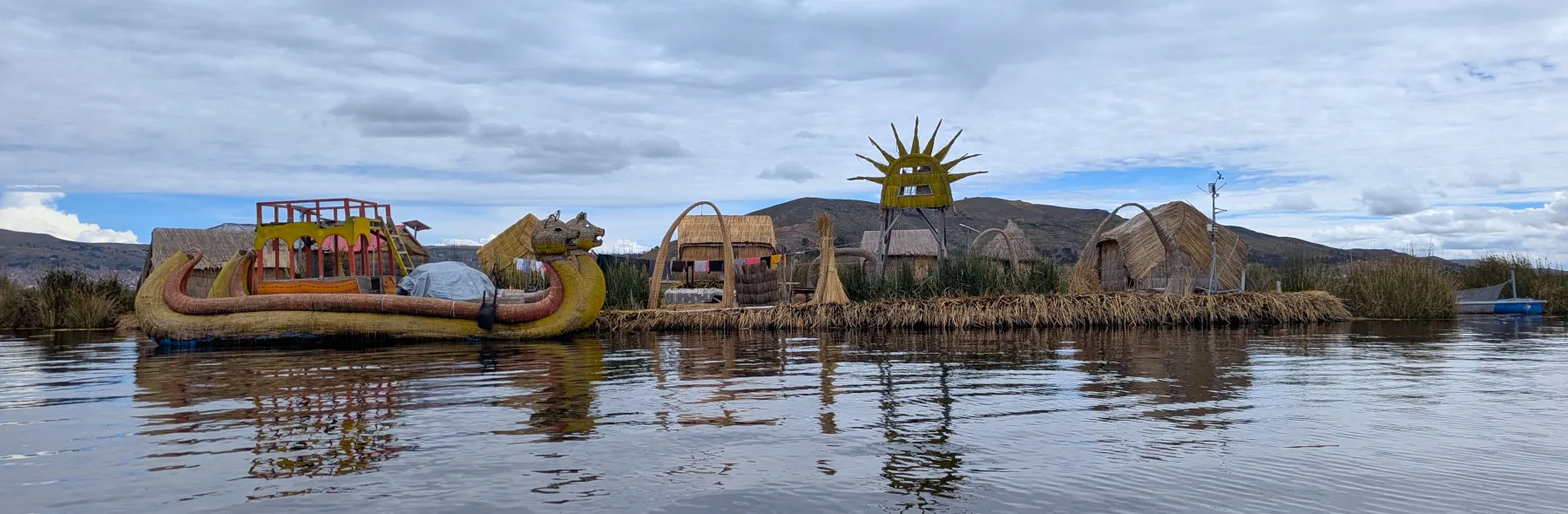
Puno is the hub of Lake Titicaca. If time is of the essence, one day in Puno is enough to explore the highlights. Your main options are:
- A half-day tour that only visits the floating Uros Islands.
- A full-day tour that visits the Uros Islands as well as Taquile Island.
If you have some extra time before you hop on your night bus to Cusco, definitely check out the historical centre of Puno. Of course, there’s the Plaza de Armas, but there’s also cool museums, markets, viewpoints, and a walking street.
If you opt for a (surprisingly affordable) private tour, the timing is very flexible until well into the evening hours 😉
Here’s our full Puno travel guide:
5 Days in Cusco
Day 17 – Free Walking Tour & Centro Historico
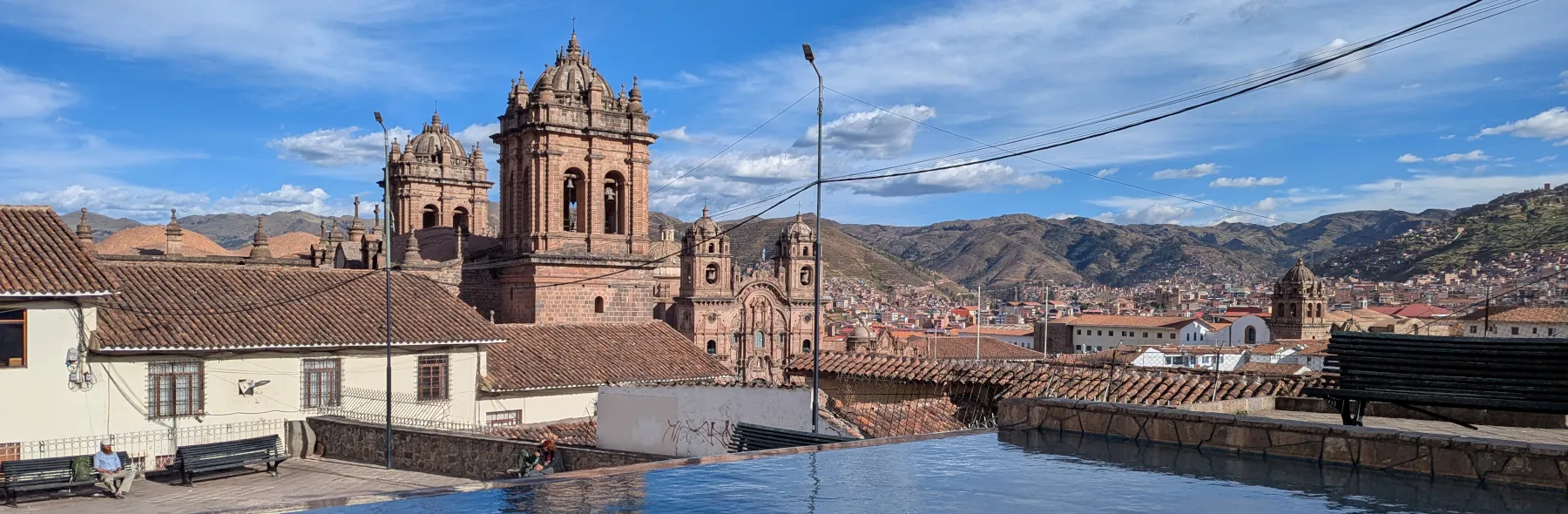
The City of Cuzco is a unique testimony of the ancient Inca civilisation. Again, start your time in Cusco with a free walking tour.
Highlights to explore with or without a guide include:
- Plaza de Armas with the Cathedral and Capilla de Nuestra Señora de Loreto.
- Qorikancha, the Inca Empire’s most important temple (tourist ticket).
- Kusicancha, birthplace of Inca Pachacutec (free).
- Calle Inca Roca & Calle Hatunrumiyoc with impressive Inca walls.
- San Pedro Market.
Here’s our full 4-day Cusco itinerary (excluding Machu Picchu):
Day 18 – Machu Picchu Day Trip
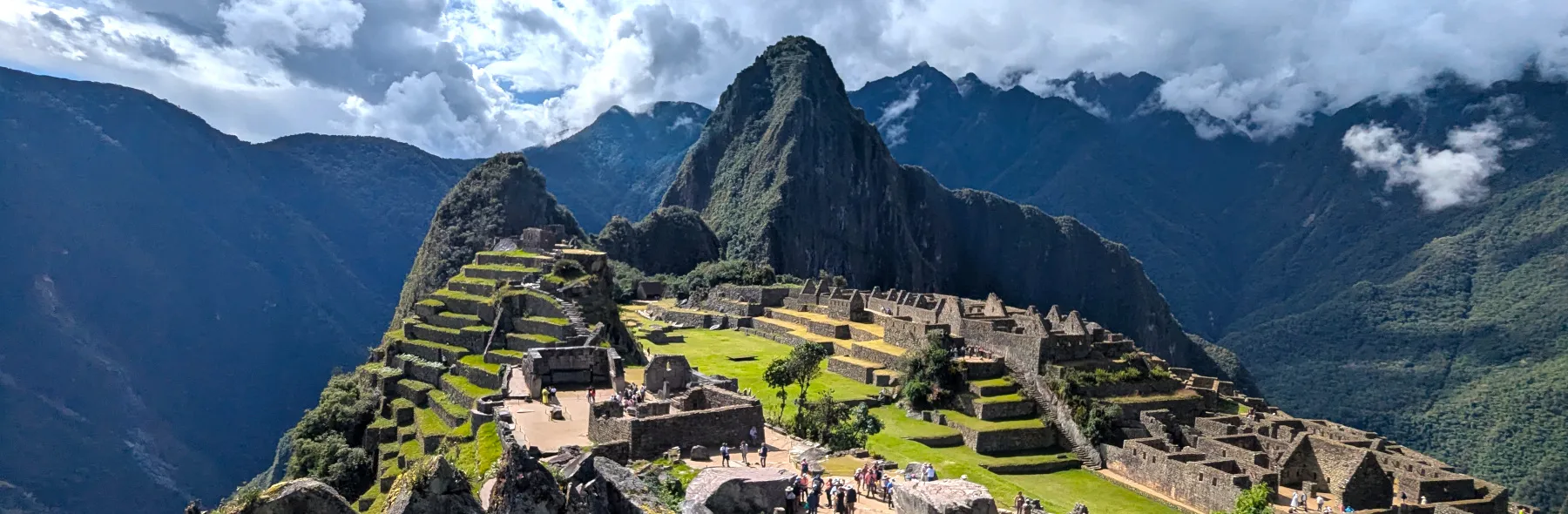
Machu Picchu is a Wonder of the World and the undisputed highlight of your time in Peru. If time is of the essence, we highly recommend a day trip from Cusco by train:
This only works if you already have a ticket. If you don’t, you have to spend at least one night in Aguas Calientes. We have described the full last-minute ticket process here:
Day 19 – Rainbow Mountain Day Trip
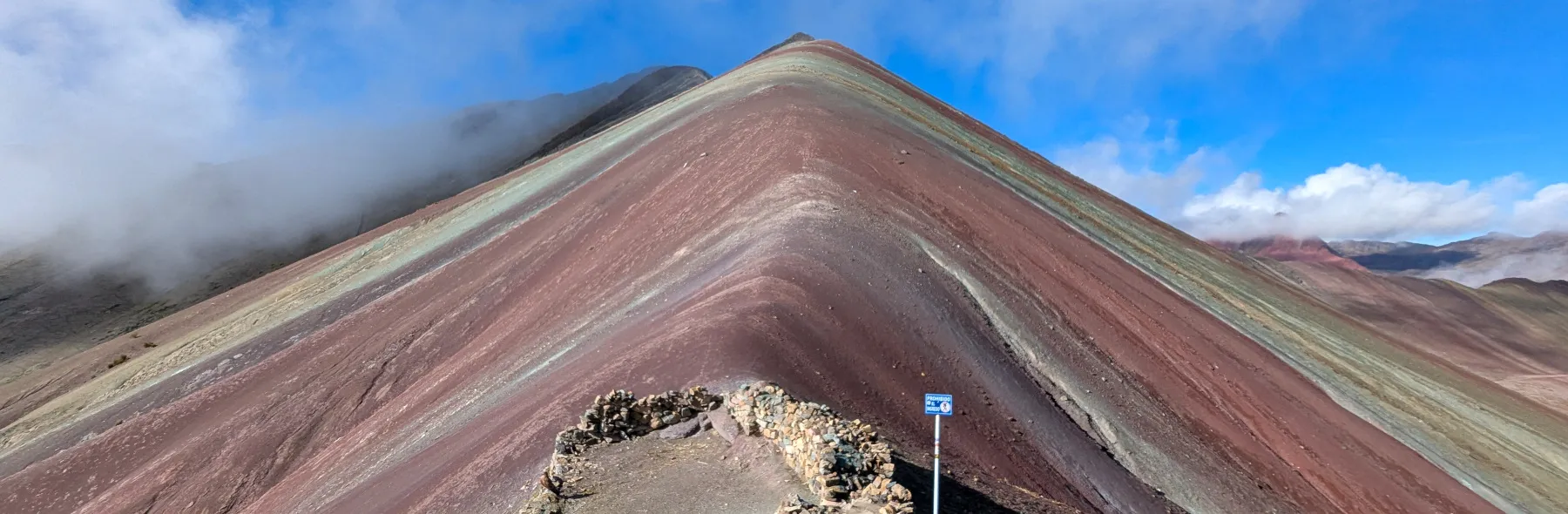
One of our highlights during our time in Cusco was our day trip to the Rainbow Mountain & Red Valley.
Rainbow Mountain or Vinicunca rises over 5,000 meters (16,000 ft) in the Andes. Its striking striped colours come from the mineral composition of the soil: red clay, green phyllites, yellow sandstones, and other minerals form natural layers that create a rainbow effect.
Most tours combine a visit to the Red Valley, which is a great addition due to its almost Martian-looking red colours.
While the hike is neither long nor challenging in itself, you have to be aware of the very high altitude. We opted for the early access tour to beat the crowds. Here is our full review:
Day 20 – Sacred Valley Day Trip
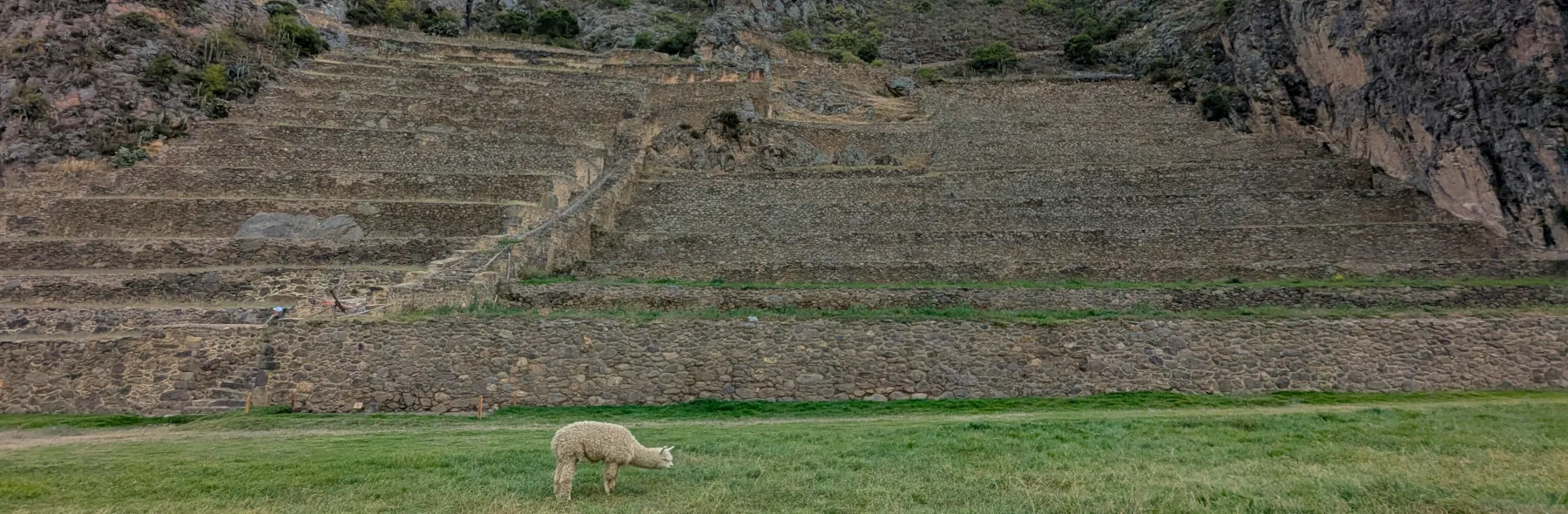
Four days in Cusco is really not a lot of time to explore everything this city and its surroundings have to offer. This is why a day trip to the Sacred Valley is a convenient, affordable, and efficient – though not in-depth – way to learn more about the Inca heritage of the region.
If you opt for the same tour we did, you will visit these five main sights:
-
Chinchero
-
Moray.
-
Maras Salt Terraces.
-
Ollantaytambo.
-
Písac.
We have written a full review of our one-day Sacred Valley tour:
Day 21 – Sacsayhuaman & San Blas
On your last day in Cusco, explore some more of the sights which are included in your tourist ticket: Sacsayhuaman, Q'enqo, Puka Pukara & Tambomachay.
You can either opt for a guided tour or go independently.
In the afternoon, head to San Blas, Cusco’s art neighbourhood with the art galleries and artisan handicraft shops, cobbled and narrow streets, as well as cute cafes and restaurants with amazing views. Keep your eyes peeled for street art and wander around as much as you like!
First, head to C. Pumacurco Street. Make your way to the Mirador de San Blas. Continue towards Mercado San Blas. Last but not least, don’t miss Plaza San Blas with the Iglesia de San Blas right next to it.
Disclaimer: This post contains affiliate links. If you use these links to buy something, we may earn a commission. You would help us a lot if you did so. Thanks.