
The Berlin-Bad Wilsnack Pilgrimage: Our Honest Review of 140 km on the Camino de Santiago

TL;DR
What happens when you walk 120 km from Berlin to Bad Wilsnack? Think church towers, empty trails, and a lot less infrastructure than we expected.
Walking a pilgrimage from Berlin probably isn't the first thing that comes to mind when you think of the Camino de Santiago. But there is a network of pilgrimage routes across Germany, including the Berlin-Bad Wilsnack Way of St. James, which runs for around 140 km (87 mi) from Berlin to the pilgrimage town of Bad Wilsnack.
This is not just a guide to the Berlin-Bad Wilsnack pilgrimage. It's our personal review based on our experience walking the route in six stages. We’ll tell you what we liked, what surprised us, where we stayed and where things were less convenient than expected. If you're considering doing the pilgrimage yourself, we hope that you feel more comfortable knowing the details of what you’re getting yourself into.
- Our Experience Walking from Berlin to Bad Wilsnack
- Our Berlin-Bad Wilsnack Pilgrimage Route
- Would We Recommend the Berlin–Bad Wilsnack Pilgrimage?
Our Experience Walking from Berlin to Bad Wilsnack
One of the things that surprised us most was how quiet the route was. During our entire pilgrimage, we never saw another pilgrim – or really another hiker at all.
We did see a couple of people walking their dogs around the Klempowsee and other visitors at the Plattenburg, but for the most part, we had the trail to ourselves.
That can obviously be a positive if you're looking for some peace and quiet. It also means that you shouldn't expect the infrastructure or social atmosphere you might associate with better-known pilgrimage routes.
The route itself is generally very well marked. We had no major problems finding our way, although there were a few places where we weren't completely sure which direction to take. The official route map is useful for cross-checking those sections.
There are also a few practical things we wish we'd known beforehand.
- Be prepared to walk on different surfaces, from high grass to tarmac. There’s no need for hiking boots.
- There are very few benches along the route. The best places to sit are often directly in front of the churches in the villages and towns. Don't expect lots of scenic rest areas with benches along the way. We ended up sitting on the floor more than once.
- Public toilets are also basically nonexistent along the route. You can sometimes use church facilities, although several churches were closed when they were supposed to be open. Cafés are another option when you come through a village, though you'll obviously need to buy something.
So yes, this is one of those hikes where you need to plan your breaks and food accordingly.
Getting to and from the Route
The official pilgrimage starts in Berlin at St. Marienkirche and is 140 km (87 mi) long. However, the first approximately 20 km (12.5 mi) from central Berlin to Hennigsdorf are generally recommended to be covered by train. We agree.
Hennigsdorf is easy to reach from central Berlin by S-Bahn, with the S25 taking you directly to the starting point of our first walking stage.
At the other end, Bad Wilsnack is also surprisingly convenient for getting back to Berlin. A regional train runs directly from Bad Wilsnack to Berlin roughly once an hour and until quite late in the evening.
Pilgrim Accommodation
One of the more unusual parts of this pilgrimage is the accommodation. Along the route, you can stay in dedicated pilgrim accommodation, often in parish halls or churches.
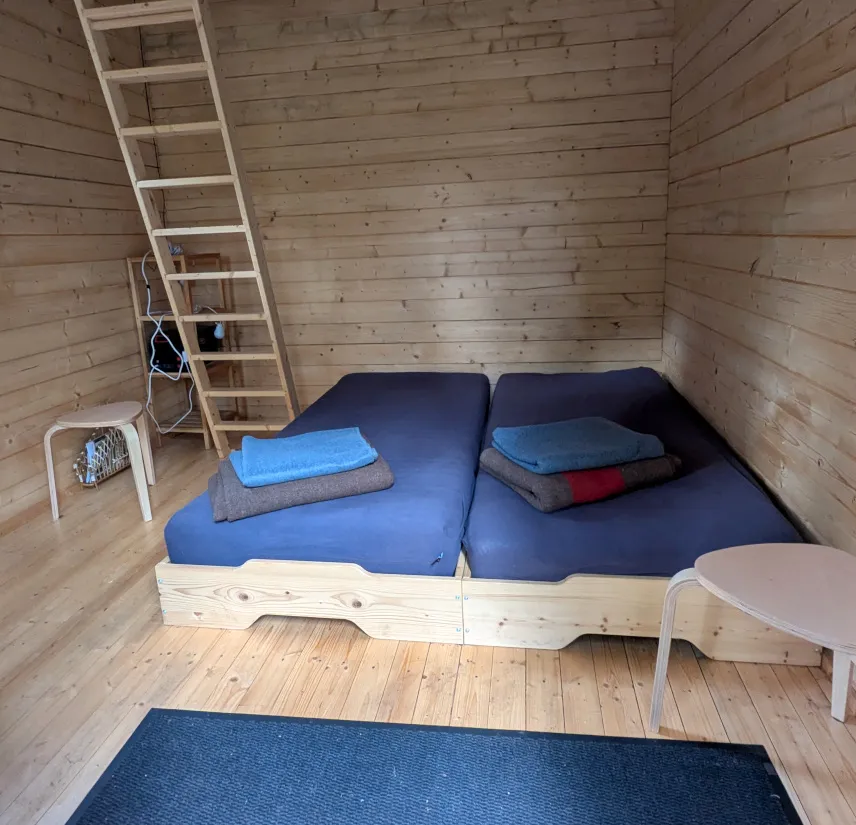
Don't expect hotel standards. Depending on where you stay, you might get anything from a proper room with a shower to a cot in a parish hall or, in our case, a night in a church tower.
Payment is donation-based, although there is usually a fixed amount suggested or requested by the accommodation.
It's also important to prebook your pilgrim accommodation. These places are not necessarily staffed or open throughout the day, and someone may need to arrange access for you. We contacted the accommodations ahead of time and arranged our stays before setting off.
Most pilgrim accommodations offered to organise basic dinner and breakfast for a small additional fee, especially in remote villages without alternative food sources.
Most pilgrim accommodations include bedding, but some do charge an extra fee so you might want to bring a sleeping bag if money is tight.
Our Pilgrim's Passport
We picked up an official pilgrim's passport at our first stop in Flatow.
Unfortunately, we weren't able to collect stamps at every stop because quite a few of the churches along the route were closed when we visited.
If collecting stamps is an important part of the pilgrimage for you, we'd recommend planning (and phoning) ahead rather than assuming every church will be open when you arrive.
Our Berlin-Bad Wilsnack Pilgrimage Route
Our total walking distance was around 120 km (75 mi), split into six stages.
We didn't necessarily choose these stages because we think they are the perfect itinerary for everyone. They simply worked for us based on the available pilgrim accommodation and what we wanted to walk each day.
Here's what each section was like from our perspective.
Our Pilgrimage Route Map
Including where we stopped to sleep and eat.
Leg 1: Hennigsdorf to Flatow
Distance: approximately 27 km (17 mi)
The first proper walking stage starts in Hennigsdorf and heads towards Flatow.
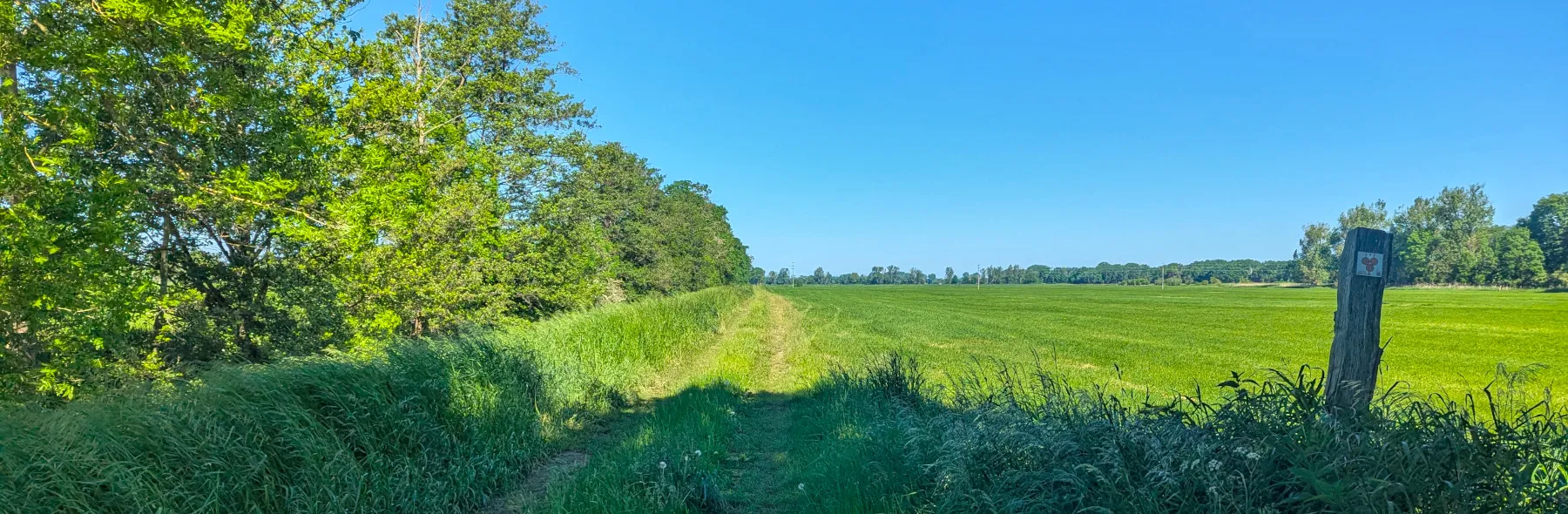
A large part of the route follows the old Poststraße between Berlin and Hamburg and takes you through the Krämer Forest. This was one of the more forest-heavy sections of the pilgrimage and, overall, a pleasant way to start.
There is a nice resting area at Ziegenkrug.
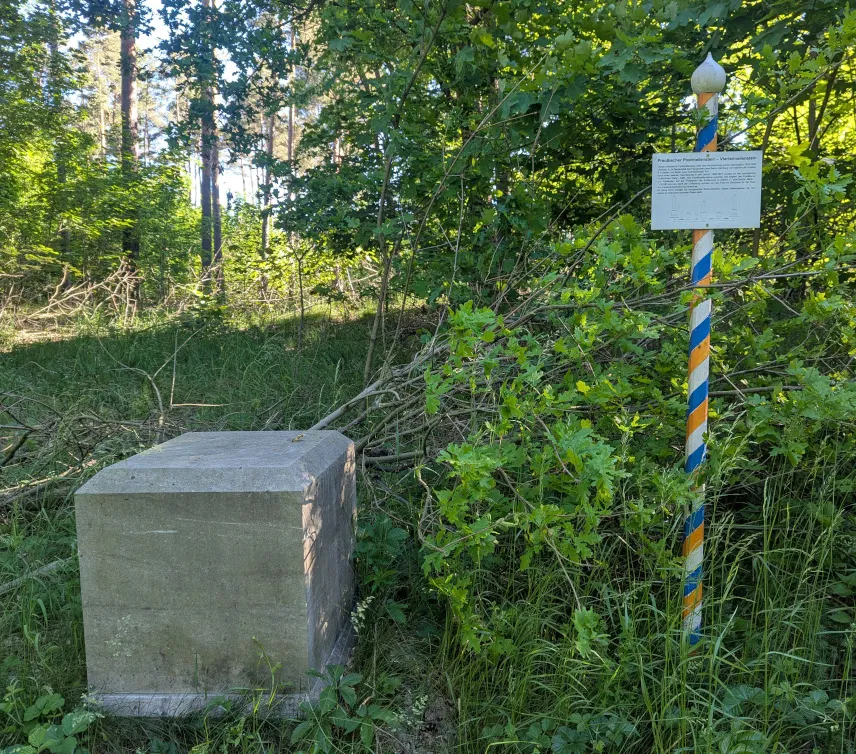
Before crossing the A10, you can make a small detour to visit Forester Reckin's grave. To be honest, we found the grave itself a little anticlimactic, so we wouldn't consider this a must-see.
After leaving the forest, the route continues along field paths before crossing the A24 shortly before Flatow.
Where We Slept in Flatow
We stayed in the parish hall, where we had a cot to sleep on.
There was no shower, although we were able to use a hose in the garden. The kitchen was reasonably well equipped, and we were provided with pasta and pesto (for an extra charge) that we could prepare ourselves.
For food, Bäckerei Guse is a yummy option – especially for breakfast and snacks.
Leg 2: Flatow - Protzen
Distance: approximately 24 km (15 mi)
This stage starts once again along the old Berlin-Hamburg Poststraße. We started walking early and even spotted a roe deer along the way.
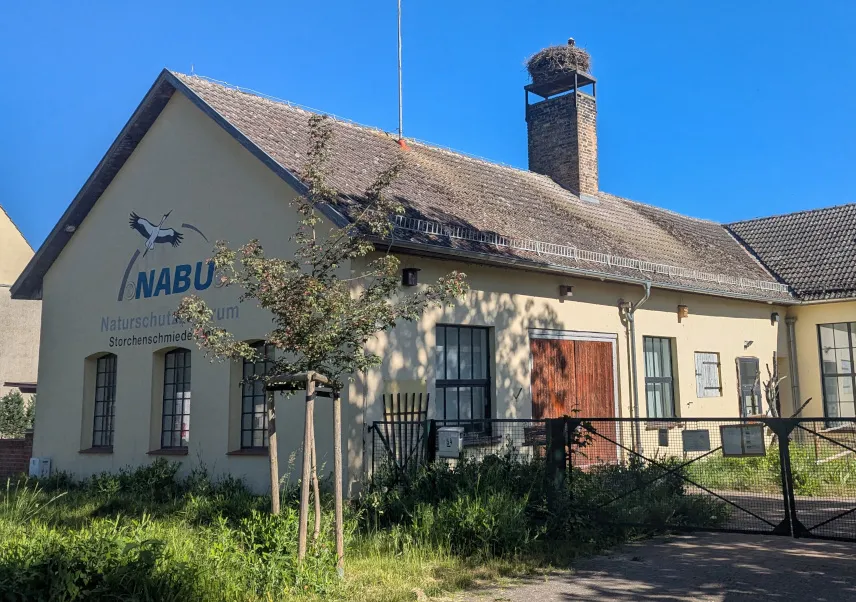
There is a section of secondary road (without sidewalk) towards Linum before the route enters the Linumer Bruch. Linum is particularly known for its storks, and depending on the season, you may see plenty of them around the village – we sure did!
From there, the route follows several canals along field paths before rejoining the secondary road shortly before Fehrbellin.
Fehrbellin itself is worth a little time if you're interested in local history. There is a local history museum (not open every day) and an impressive church dating from 1865. Between Fehrbellin and Protzen, the trail follows the Luch, a marshy lowland.
In Protzen (which is also roughly a 30-minute walk off the route), there is another local history museum (also not open every day) in the manor house across from the church.
Where We Slept in Protzen
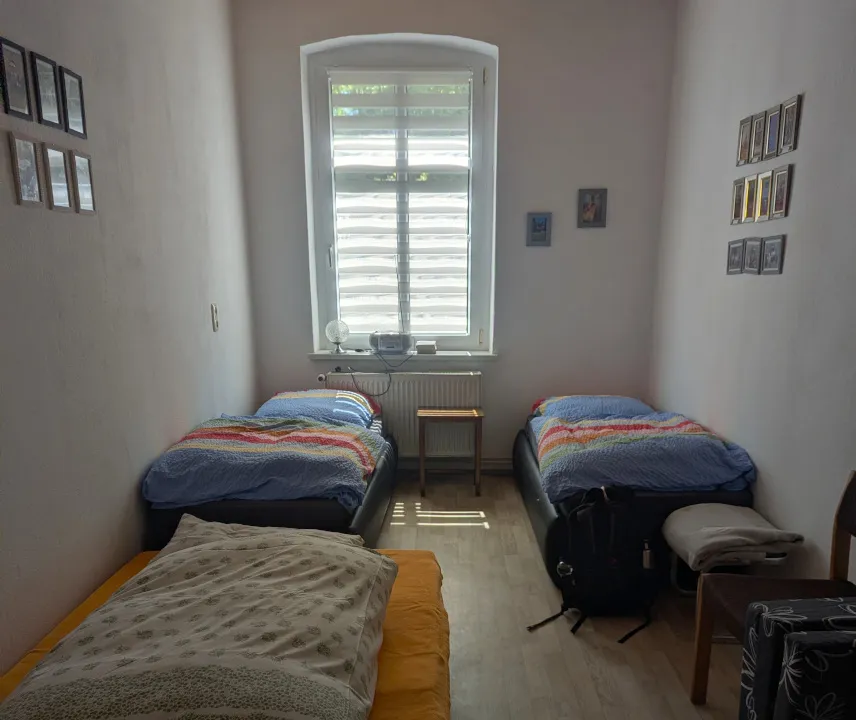
We stayed in a lockable room in the parish hall.
There was no shower and only a tiny sink, but the kitchen was reasonably well equipped and even had a coffee machine.
There was no food provided.
The garden was lovely, though, and we were also given the key to the fieldstone church. The woman who let us in was incredibly kind (and gave us some cookies).
Fehrbellin is the best place along this section to stock up on food, with supermarkets and restaurants available.
Leg 3: Protzen – Barsikow
Distance: approximately 13.5 km (8.4 mi)
This short stage takes you through the Luch towards Garz.
We really liked Garz. The village is charming, and there is a castle whose grounds were open for us to wander around.
Along the way, you'll also pass the Nacklerer Gericht, a crossroads with a slightly spooky reputation, and the Planetenpfad Rohrlack-Vichell.
One of the more unusual sections comes towards the end of the stage: a sandy stretch that genuinely makes you feel a little more like a medieval pilgrim. It also makes walking considerably harder.
Where We Slept in Barsikow
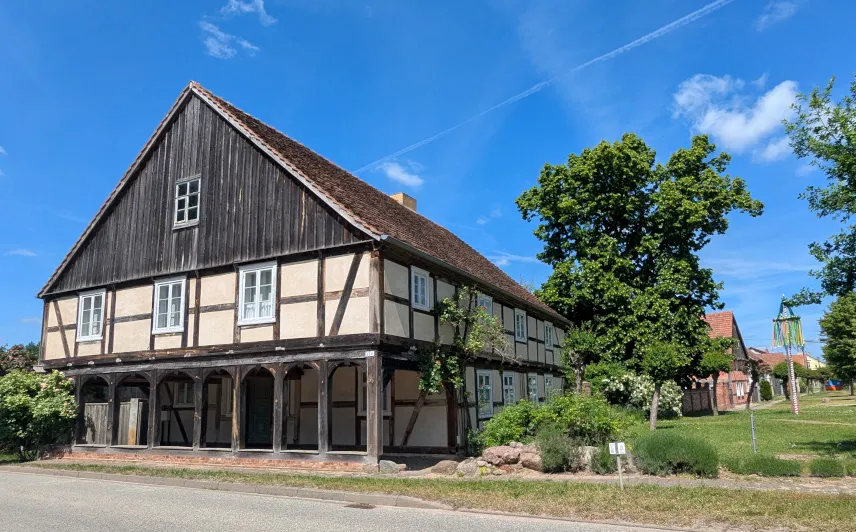
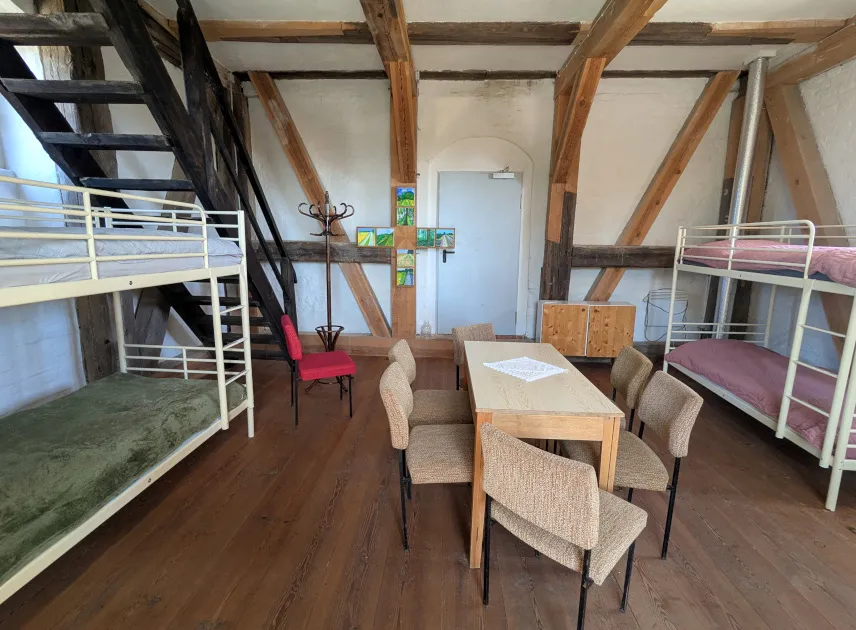
The highlight was definitely the accommodation itself: we slept in a church tower.
The old man who gave us the key gave us a thorough tour of the church before showing us where we could stay. It was a really special way to experience the place and definitely one of the more memorable accommodation experiences of the pilgrimage.
There was a proper bathroom with a shower and a tiny kitchen.
The food that was provided for an extra fee was basic – bread in the evening and bread rolls in the morning.
For a warm meal, we recommend Alter Konsum right next door. They open for pilgrims even when it isn't normally their opening day.
Leg 4: Barsikow – Kyritz
Distance: approximately 20 km (12.5 mi)
This section mixes field paths with secondary roads until Wusterhausen.
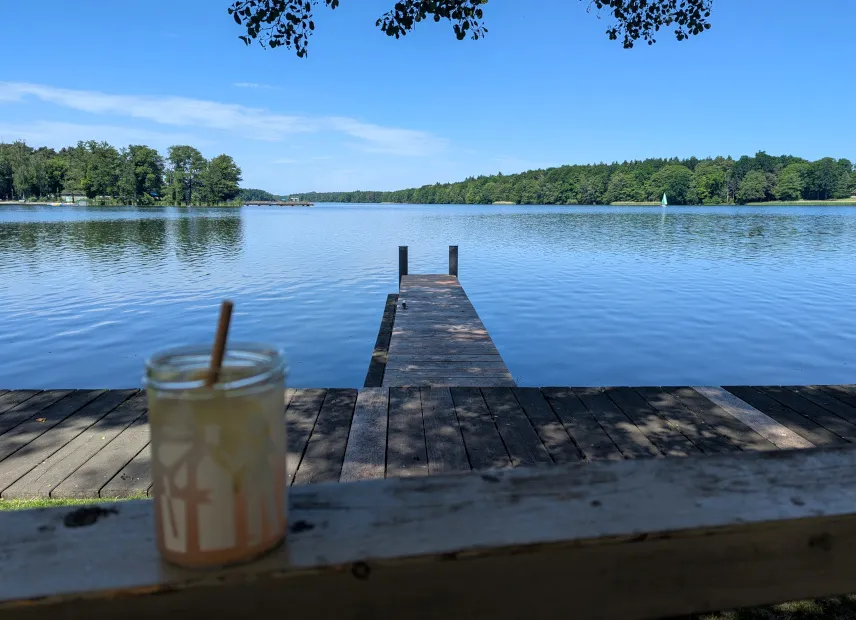
One of our favourite parts came after Wusterhausen, when the route reaches Klempowsee. There are some lovely views and opportunities for swimming, although there were also plenty of mosquitoes when we were there.
Where We Slept in Kyritz
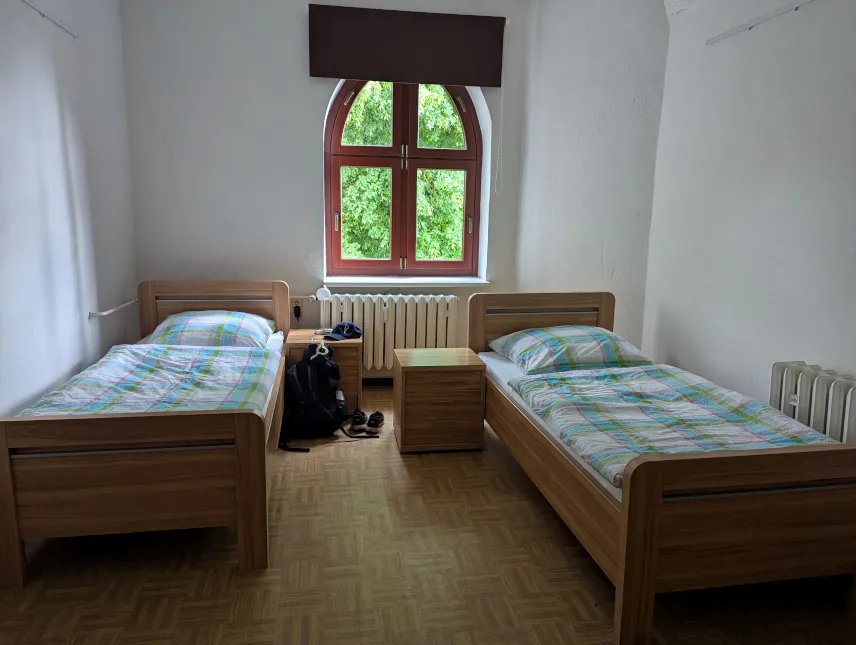
In Kyritz, we stayed in the Heilig-Geist-Kirche, which has several rooms specifically for pilgrims.
Compared with some of the previous nights, this felt positively luxurious: there was a proper bathroom with a shower and a well-equipped kitchen.
The accommodation is donation-based, and there was no food provided.
Kyritz is also one of the easier places along the route if you want more conventional accommodation. There are apartments and hotels in the town centre, as well as options closer to the lake.
There are also plenty of supermarkets and restaurants, so this is a good place to stock up.
Leg 5: Kyritz – Berlitt
Distance: approximately 9 km (5.5 mi)
This was by far our shortest walking day.
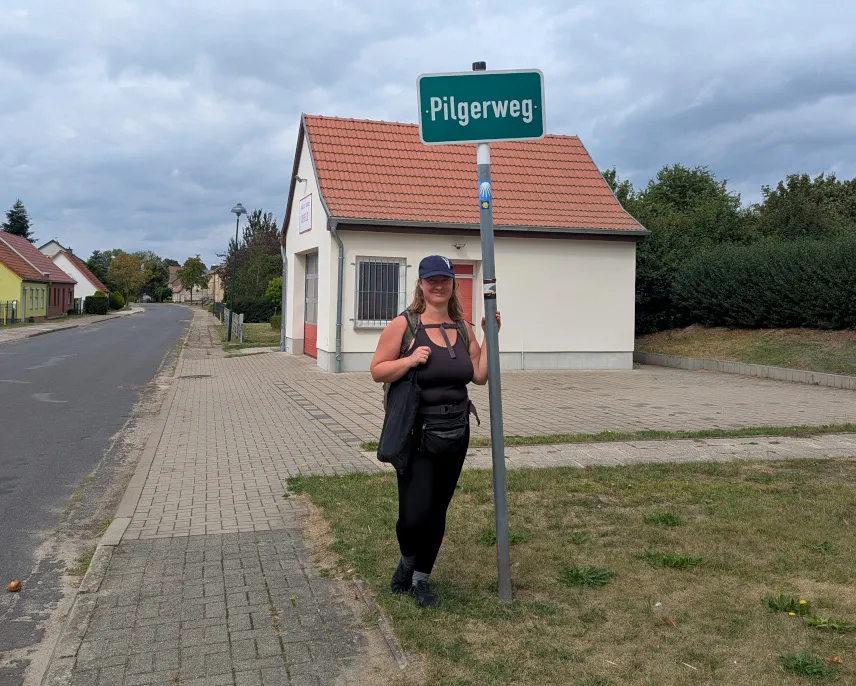
The route initially follows a secondary road with a sidewalk as far as Rehfeld. From there, it changes into a farm track running through a small stream valley all the way to Berlitt.
Where We Slept in Berlitt
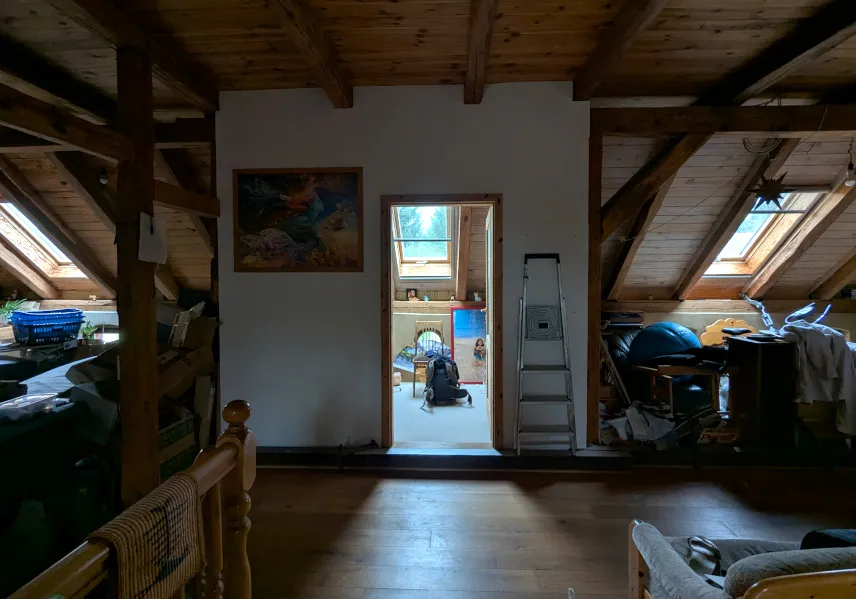
We stayed in a room in the attic of Harald, the village head.
As it was his private house, there was a proper bathroom and a well-equipped kitchen. For a small fee, we could also get bread and spreads for dinner and breakfast. If you don’t bring your own sleeping bag, you can rent bedding for an extra fee.
There is another pilgrim accommodation option – also managed by Harald – in the manor house next to the church. It has a bedroom, living room, full kitchen and bathroom with a bathtub. For anyone who is more introverted or simply wants a quiet place to themselves, we think this might actually be the better option.
Food planning is also important here. We didn't find a single food source between Kyritz and the Plattenburg, although there is a café at the castle.
Leg 6: Berlitt – Bad Wilsnack
Distance: approximately 29 km (18 mi)
The final stage is a long one.
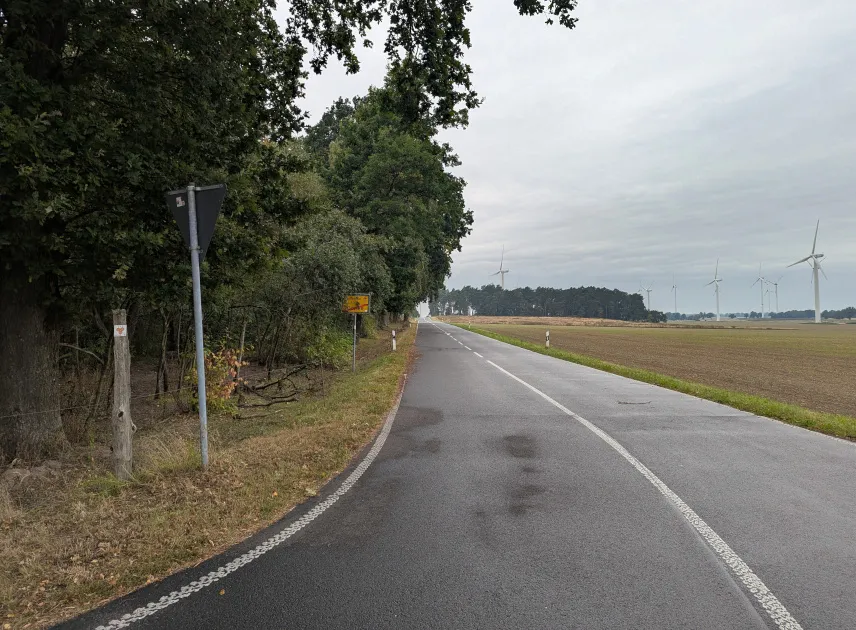
Between Berlitt and Groß Leppin, much of the route follows secondary roads without sidewalks. It wasn't our favourite walk, and the rain we had on our final day certainly didn't improve our motivation.
Things get considerably nicer once you reach the Plattenburg, the oldest moated castle in Northern Germany.
From the castle, the route continues through forest paths towards Bad Wilsnack.
Where We Slept in Bad Wilsnack
For our final night, we stayed in a tiny house in the garden of the Wunderblutkirche with a composting toilet in a hut next door.
There are public toilets in the parish hall nearby, and a shower is available at the pilgrims' café next door after 6 pm.
There’s a kettle next to the tiny house and the parish hall has a well-equipped kitchen, although no food was provided.
If the weather isn't suitable for sleeping in the garden, you can alternatively sleep on a mattress in the parish hall.
There are plenty of supermarkets and restaurants in Bad Wilsnack for your post-pilgrimage recovery meal.
Would We Recommend the Berlin–Bad Wilsnack Pilgrimage?
Yes – but with some caveats.
We liked the fact that the route is quiet, easy to reach from Berlin and generally very well marked. You don't need to travel halfway across Europe to get a pilgrimage experience, and the lack of other hikers gives the route a very different atmosphere from more famous pilgrimage trails.
At the same time, the infrastructure is basic in places.
There aren't many benches. Public toilets are rare. Food options disappear completely on some sections, and accommodation can mean anything from a proper room with a shower to a cot in a parish hall or a garden house.
For us, that's part of what made the experience interesting. It felt much less polished and commercialised than some of Europe's better-known long-distance trails.
But that's also exactly why we think it's worth knowing what you're signing up for.
If you're looking for a comfortable hiking holiday with accommodation and restaurants conveniently spaced along the route, this probably isn't the pilgrimage for you.
If you're looking for a quiet, relatively unknown pilgrimage that you can reach from Berlin by public transport, the Berlin-Bad Wilsnack route is definitely worth considering.
And honestly, the fact that we walked around 120 km without seeing another pilgrim probably says more about this route than anything else.


