San Cristóbal de las Casas Travel Guide (+ Map)

TL;DR
A highland town with strong Indigenous roots, great food, and easy access to some of Chiapas’ best nature – San Cris is either a quick stop or a place you won’t want to leave.
If you’re planning a backpacking trip through Mexico, chances are San Cristóbal de las Casas has popped up on your radar – but figuring out whether it’s actually worth your time isn’t so straightforward.
We came to San Cris while travelling overland between Oaxaca and Yucatán, trying to decide how long to stay, what to prioritise, and whether all the hype matched reality. Between the altitude, the strong Indigenous culture, the markets, and the steady flow of expats and digital nomads, it’s a place with a very specific vibe – and not everyone clicks with it.
In our travel guide, we’re breaking it down properly: what San Cristóbal is actually like, what’s worth doing (and what isn’t), the best day trips, and how to plan your time without overcomplicating it.
- San Cristóbal de las Casas Travel Guide
- San Cristóbal de las Casas Mexico Map
- Is San Cristobal de las Casas Worth Visiting?
- Where We Stayed in San Cristobal de las Casas
- How to Get to San Cristobal de las Casas
- How to Get Around San Cristóbal de las Casas
- San Cristóbal de las Casas Things to Do
- San Cristóbal de las Casas Day Trips
- Our Favourite Restaurants in San Cristóbal de las Casas
- How Many Days in San Cristobal de las Casas Do You Need
- San Cristóbal de las Casas Tips
San Cristóbal de las Casas Travel Guide
San Cristóbal de las Casas Mexico Map
Is San Cristobal de las Casas Worth Visiting?
Honestly, San Cristobal de las Casas is not for everyone. For some – you’ll often read the word “energy” – San Cristóbal becomes a bit of a vortex, where a short stay turns into weeks or months.
And it’s true that there’s a lot to appreciate. Set at 2,100 m (6,890 ft), the cooler mountain air is a welcome break from the heat elsewhere, even if the altitude takes a day or two to adjust to.
The town blends colonial architecture with strong Indigenous culture and vibrant markets on the one hand, and a strong focus on spirituality and excellent (vegan) food on the other.
But while the markets are colourful and full of artisanal goods, at times they lean more commercial than authentic. The strong expat and nomad presence adds to the slightly unauthentic feel.
In contrast to many, San Cris wasn’t our personal favourite. But even keeping this in mind, it’s a logical (and worthwhile) stop along the way if you’re travelling overland between Oaxaca and Yucatán.
And who knows? Maybe you’ll come to a different conclusion than us and find yourself in the “vortex” that is Cristobal de las Casas.
Where We Stayed in San Cristobal de las Casas
We stayed at La Abuelita Hostal, which was a full 10/10. It is affordable, the location is great, the staff are lovely, the rooftop is amazing, the rooms are super cosy, the showers are hot, the kitchen is well-equipped, there’s free drinking water and tea, the WiFi is great, and so on.
Our only point of criticism? We tried to extend our stay, but it was fully booked. So maybe be smarter than us and reserve enough time in advance.
How to Get to San Cristobal de las Casas
1. Flying to San Cristóbal de las Casas
The closest airport to San Cristobal de las Casas is Aeropuerto Internacional Ángel Albino Corzo (TGZ) in Tuxtla Gutiérrez. It is roughly a roughly 1.5 hour drive from San Cristobal de Las Casas. We’re not sure why it’s called an international airport, as we only found a limited number of domestic flights.
2. Buses to San Cristóbal de las Casas
If you’re travelling Mexico overland, San Cristobal de las Casas is a logical stop between Oaxaca and Yucatan (which is what we did).
There are direct buses from
- Puerto Escondido (roughly 13 h)
- Huatulco (roughly 10.5 h)
- Palenque (roughly 6.5 h on the direct route and 7+ hours via Villahermosa, which is considered the safer route)
3. Sightseeing Transfer to Palenque
If you choose to travel on the direct route between San Cristobal de las Casas and Palenque, we highly recommend doing a sightseeing transfer that stops at the beautiful Agua Azul and Misol Ha waterfalls and includes a visit to the Palenque ruins.
How to Get Around San Cristóbal de las Casas
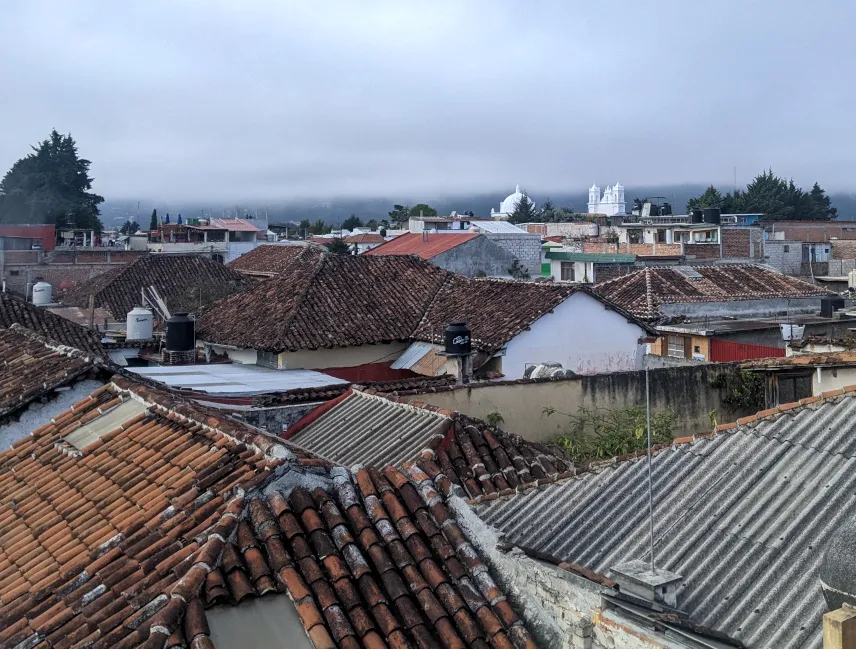
We found everything in San Cristobal de las Casas to be within easy walking distance – including the bus station.
San Cristóbal de las Casas Things to Do
1. Go on a Free Walking Tour
We love free walking tours to get an overview of a new city, and the one in San Cris was simply amazing.
We saw the highlights of the city and visited some of the markets. Our favourite parts were trying local food and learning about the street art.
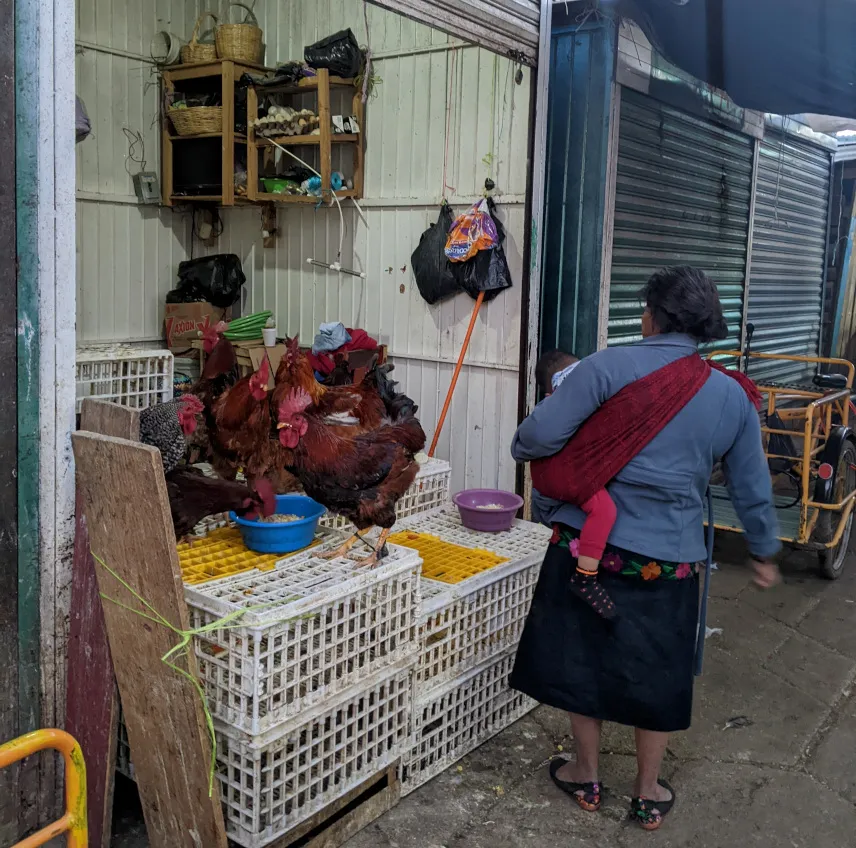
2. Mercado Viejo
Mercado Viejo – aka Mercado Municipal José Castillo Tielemans, named after the former governor, who helped build it in the 1960s – is one of the city’s main public markets and a daily hub for locals.
The current market is over 50 years old, but a central market has been recorded in the city for more than 500 years. With around 2,800 stalls, it’s packed with everything from fresh produce and handmade goods to ready-to-eat local food.
Vendors come from many Indigenous communities, like Tsotsil, Tseltal, Ch’ol, and Tojolabal, bringing products from across the region.
For visitors, it’s not just a place to shop – it’s one of the best spots to experience local culture, eat authentic food at low prices, and support small, often women-run businesses.
3. Barrio del Cerrillo
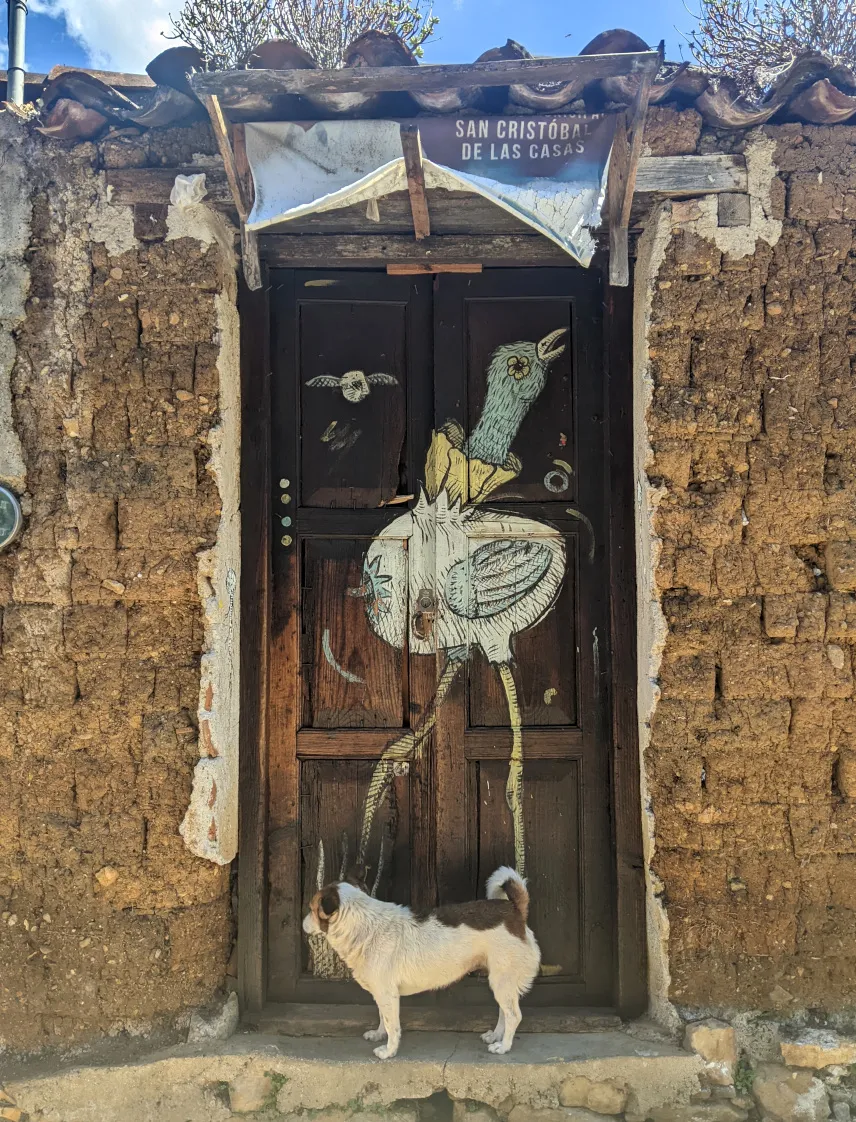
This historic neighbourhood in San Cristóbal de las Casas was founded by Indigenous groups, including Tsotsil, Tseltal, Ch’ol, Tojolabal, and Zoque peoples. After early colonial abuses, Bartolomé de las Casas’ complaints led to their freedom in 1549. The community built a church dedicated to the Lord of the Transfiguration in 1737, which is still active today.
The neighbourhood is known for traditional wrought-iron craft – an inherited Spanish technique using heat and hammering to create locks, bells, candelabras, and other colonial-style pieces that remain part of Chiapas’ visual identity.
It’s also a hub for political street art, often tied to the Zapatista Army of National Liberation. Since their 1994 uprising, the Zapatistas have used murals as a form of collective expression – painted by community members. These works reflect Indigenous identity, history, and resistance, turning everyday spaces into a kind of open-air gallery.
4. Temple of Our Lady of Guadalupe
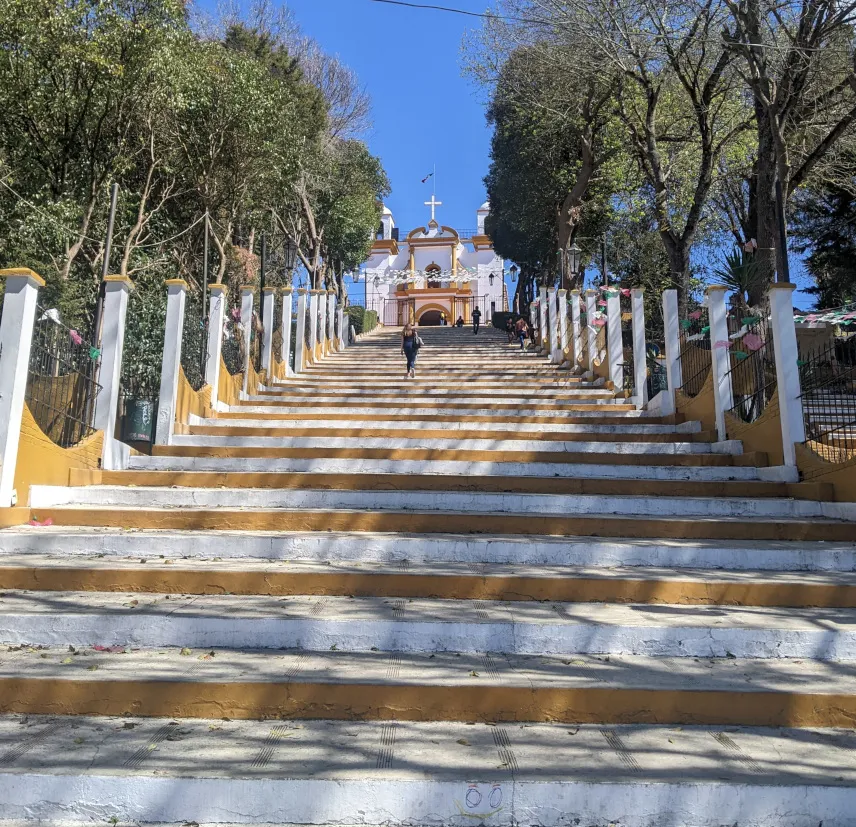
Guadalupe Church sits atop Cerro de Guadalupe, reached by about 80 steps. Built in 1834, it’s a simple one-nave church housing images of the Virgin of Guadalupe, including a 19th-century sculpture.
The real draw is the viewpoint (also known as Mirador de la Escuela SolMaya) – one of the best in the city, especially at sunset.
We visited during a service by accident and decided to stop and participate for a while – let’s just say that most services we’ve been to before were more rigid.
5. Main Plazas & San Cristóbal Cathedral
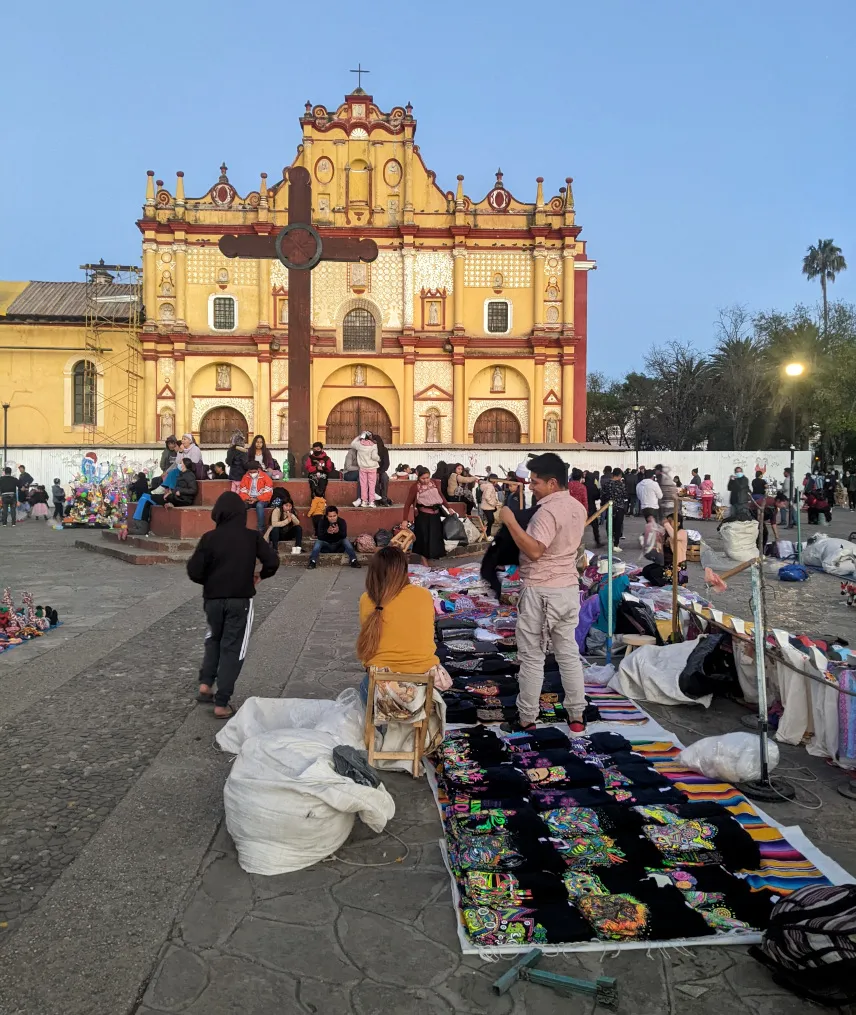
San Cristobal has two main plazas: Plaza de la Paz and Plaza 31 de Marzo.
Plaza de la Paz sits in front of the bright yellow cathedral and serves as a main meeting point with market stalls and street food, while Plaza 31 de Marzo on the other side is a leafy park with a gazebo where people gather, relax, often with live music or other performances.
At the centre stands the Catedral de San Cristóbal de las Casas, a colonial-era church with Baroque and Moorish influences.
6. Real de Guadalupe & Avenida Miguel Hidalgo
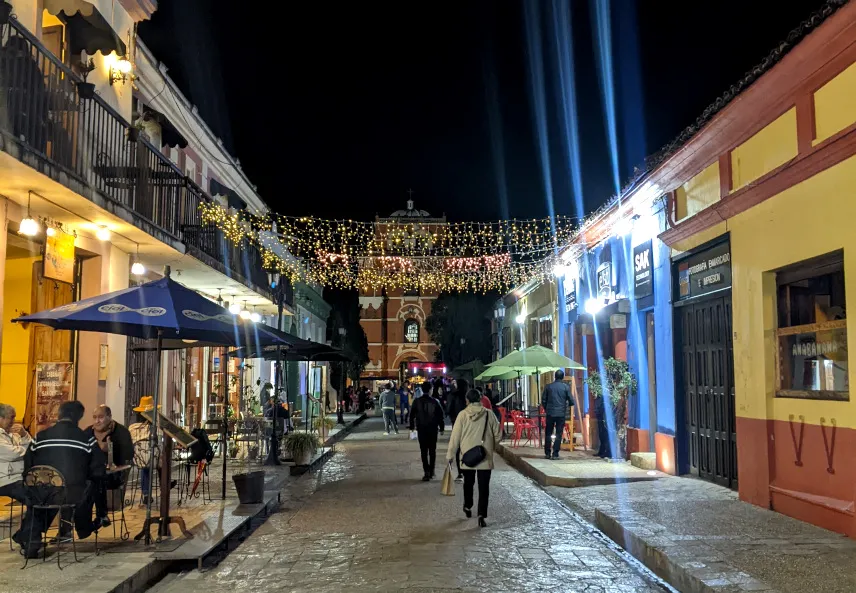
San Cris is very pedestrian-friendly. The main car-free street is Real de Guadalupe, running between the Zócalo and Guadalupe Church. It is lined with cafés, restaurants, shops, and artisan stalls.
Avenida Miguel Hidalgo is another popular car-free street in San Cris. It is more nightlife- and food-oriented, with bars and casual eateries. At the far end stands the Arco del Carmen, a former 16th-century convent entrance with a distinctive Moorish design.
Together, the two streets form the core pedestrian network where most walking, dining, and evening social life happens.
7. Santo Domingo Convent, Textile Museum Mundo Maya & Artisan Market
Santo Domingo Church is one of the city’s best-known colonial churches, famous for its richly decorated Baroque façade. It was part of the convent of Santo Domingo.
Inside the former convent complex, you can nowadays find the Museo de los Textiles del Mundo Maya, which showcases Indigenous weaving traditions, garments, and textile techniques from the region, along with workshops and rotating exhibitions. The best: the entrance is free.
Right outside, the surrounding artisan market completes the area. It’s one of the most active spots in the city for handmade crafts, especially textiles, clothing, and souvenirs.
San Cristóbal de las Casas Day Trips
1. Sumidero Canyon
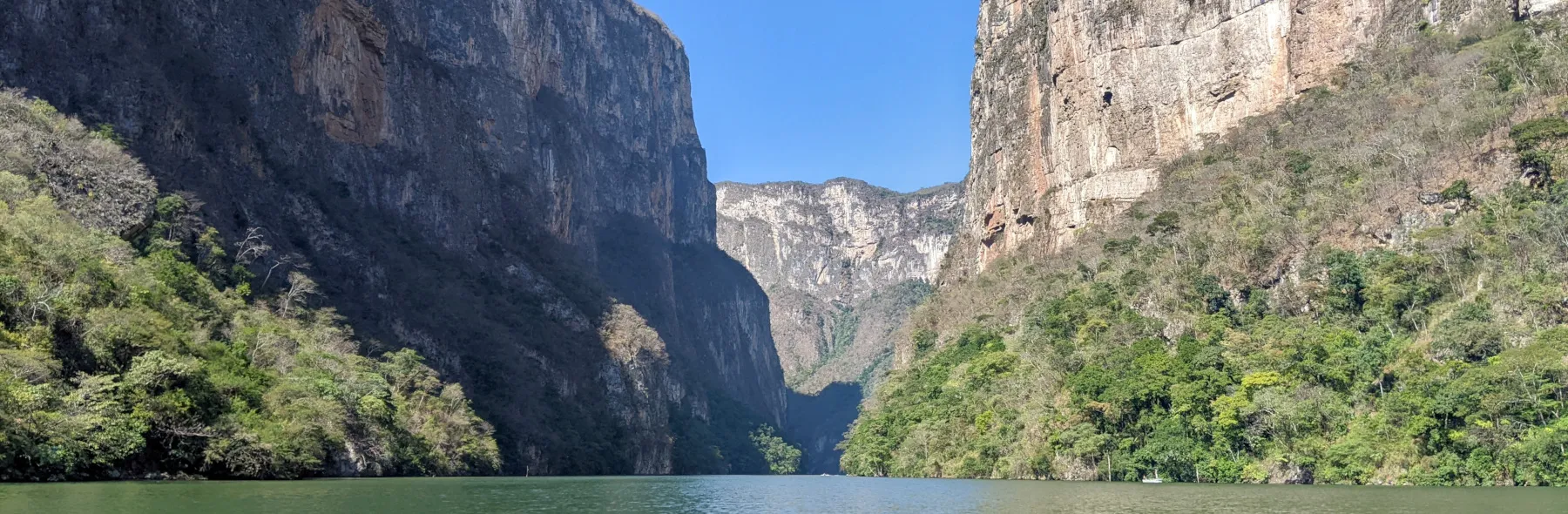
The most popular day trip from San Cristobal de Las Casas is to Sumidero Canyon, the deepest canyon is Chiapas, with cliffs reaching up to 1,000 metres (3,300 ft).
A typical tour includes a boat tour through the canyon with wildlife spotting, viewpoints on the rim of the canyon, and a visit to the cute town Chiapa de Corzo.
We have written a full review of our Sumideo Canyon day trip:
2. El Chiflon Waterfalls & Montebello Lakes
The second most popular tour from San Cristobal del las Casas takes you to the El Chiflon Waterfall and Montebello Lakes.
The first stop is the El Chiflón Waterfalls, about 2.5 hours from San Cris. This ecotourism park follows a turquoise river through a series of five cascading falls. The best known is Velo de Novia, which drops over 120 meters (400 ft).
A trail leads past several viewpoints and natural swimming pools where you can cool off, have a picnic, or simply enjoy the scenery. The further you go, the fewer people you’ll see.
The tour continues to Lagunas de Montebello National Park, a landscape of more than 50 lakes set in a lush forest. Highlights include Cinco Lagos, Pojoj, Montebello, Tziscao, and Lago Internacional (where the natural border between Mexico and Guatemala runs through the water, letting you literally stand between two countries).
3. Agua Azul, Misol Ha, & Palenque
We absolutely loved the Agua Azul & Misol Ha Waterfalls, and the Palenque Ruins are the most visited sight in all of Chiapas.
The Agua Azul Waterfalls are a series of bright turquoise cascades. The river flows over limestone terraces, creating its signature colour. As the water runs through multiple levels, you can find loads of natural pools to admire and swim in. There are many stalls where you can buy drinks, snacks, or souvenirs.
The Misol-Ha Waterfall offers a very different atmosphere. It drops in a single curtain of water into a deep pool surrounded by dense rainforest. A short path even leads behind the waterfall, where you can feel the full force and mist up close. On the far end of the trail, there’s a cave with a waterfall inside. When we visited, there was a guy renting out flashlights if you wanted to take a look (which we sure did).
Palenque brings the day trip into a completely different world. Hidden in the thick jungle, this ancient Maya city is known for its impressive pyramids, carved temples, and elevated plazas. Walking through the site feels like moving through a landscape where nature and history are deeply intertwined – howler monkeys in the trees above, one of the most important archaeological sites in Mesoamerica below.
4. Arcotete Ecological Park
We didn’t visit here ourselves, but Arcotete Ecological Park, just outside of San Cris sounds like a great alternative to enjoy the Chiapas nature without the steep driving times.
It’s best known for the stone arch that gives the park its name and its walkable cave system, with both narrow passages and natural openings.
Beyond the caves, there are suspension bridges, riverside walks, and viewpoints. Optional activities like ziplining, small boat rides, or rock climbing add a bit of variety.
There are also many other ecoparks dotted around San Cristóbal de las Casas, like
- Rancho Nuevo Caves
- Mamut Caves
- Moxviquil Ecological Reserve & Orchid Garden
- El Encuentro
You can either go independently or by a guided tour that combines Arcotete and Rancho Nuevo Caves:
5. Visit Indigenous Communities
Chiapas is home to one of Mexico’s largest Indigenous populations, and visiting nearby communities around San Cristóbal de las Casas is one of the most meaningful ways to understand the region’s living culture.
A popular option is a guided trip to villages like San Juan Chamula and Zinacantán, where daily life, markets, and textile traditions remain closely tied to Tzotzil identity.
San Juan Chamula is especially well known for its church, where Catholic and Indigenous spiritual practices blend in a very distinct way. Inside, ceremonies take place on a floor covered in pine needles, with candles, incense, and offerings used in rituals led by local practitioners. Note that photography is not allowed.
In Zinacantán, the majority of the population is Tzotzil Maya indigenous people, and their traditional clothing and language are omnipresent.
These towns are best visited with a guide, who can provide context around traditions, language, and history that aren’t always visible on the surface.
6. Arco del Tiempo
Honestly, we only learned about this while doing our research for this blog post. Arco del Tiempo is supposedly one of the largest rock arches in the world (although it does not currently make the Wikipedia top 20 list), with 180 m (590 ft).
The only way to get there that we found is this amazing 2-day tour that includes abseiling down the canyon and camping by the riverside.
Our Favourite Restaurants in San Cristóbal de las Casas
Like all around Mexico, our favourite place to eat was the local market. Here are some restaurants in San Cristóbal de las Casas that we also enjoyed
- Kukulpan for breakfast
- Bar y Restaurante Estación 1528 for a mix of Mexican and Western options and yummy drinks
- La Viña de Bacco for wine and tapas
- La Espirituosa to taste the local spirit Pox
How Many Days in San Cristobal de las Casas Do You Need
Two days is the bare minimum to spend in San Cristobal de Las Casas: one day to see the city itself, and one day to go on a day trip.
Personally, we would say the sweet spot is around 3 to 4 days to spend more time in the city and do one additional day trip.
Many travellers seem to get “stuck” in San Cristobal de Las Casas for weeks or even months, but we, as beach people, did not hear that call.
Here’s our efficient Mexico itinerary, including two days in San Cristobal de Las Casas:
San Cristóbal de las Casas Tips
ATMs in San Cristóbal de las Casas
We found ATMs of the most important banks dotted around the main square.
Supermarkets in San Cristóbal de las Casas
There are some smaller shops dotted around the historical centre of San Cristóbal de las Casas. You can find local bakeries, cheese shops, fruit and vegetable vendors – and interestingly a ham shop.
There’s also a huge Chedraui, roughly a 20-minute walk from the centre.
Internet in San Cristóbal de las Casas
The internet in our accommodation was amazing. Our eSIM card worked fine around town.
Is San Cristóbal de las Casas Safe
San Cristóbal de las Casas is popular with tourists, nomads, and expats, and is generally considered safe. We felt safe walking around the historical centre both during the daytime and in the evening.
This post contains affiliate links. If you use these links to buy something, we may earn a commission. You would help us a lot if you did so. Thanks.